Thursday, April 26, 2007

Oh, Most Reviled One

lockerbeesAs a counterpart to the blessing poem from the Oh, Most Revered One prompt, call down the ire of the gods and goddesses or Ruler of Hell on some one, some thing or some endeavor with a curse poem.

It's the opposite of the blessing poem. You can begin by addressing the higher power and then like a warm up, you can start each line with "May" or "Let". Like a list poem, it can be a list of things you want harmed and the harm you want to befall them. It can be a list of harms you want to befall someone who has really upset you. It can be events you want to go awry to foil your rival.

Here's a few lines from Paul Janeczko's curse poem: (His is rhyming couplets. You don't need to rhyme (but, in his poem's case, it helps give it a less serious tone :-)
May your gym shorts drop below your knees
May your locker fill with killer bees

May your parents find out what you did
May the bully find out where you hid

May you get a pimple on your nose
May you grow an extra pair of toes
From Poetry from A to Z by Paul B. Janeczko.

The third eye

thirdeyeFor the poetry warm up today, use the template: "The third eye can see ..."

The third eye can see what regular eyes can't or is only open when the regular eyes are closed.

Here are some examples of children's poems from the book:
The third eye can see inside me
The third eye can see my voice
The third eye can see my bones
The third eye can see the wind
From Wishes, Lies, and Dreams: Teaching children to write poetry by Kenneth Koch.

Tuesday, April 24, 2007

Automatic poetry generator

woodsghost.jpgThe Automatic Poetry Generator. Something to play with :-)

Though this generates entire "poems" use it as a starting point. For each line write a second line to follow. You can use the lines as the basis of your own poem or link them together. It doesn't need to rhyme but you can if you'd like. Here's some examples of poems generated at the site. Use these or generate your own.

All peaceful about the fog

Strangely comely beyond the ground
You destroy dank ghosts on the trees
Oh God! The Fool is good
Totally murky on the earth
You breathe sensuous bugs beyond the rain
Be aware! The twilight gets weird
All peaceful about the fog
We spread cold knives before the land
God! The Knave was hard
wary hopeful
fading slowly
so many roads to choose from
In whose heart
the refugee
take comfort
not knowing why

Strangely hot about the fire

Weird and glowing over the fire
I stroke dry rabbits in the towers
Be watchful. The vision will be born
Strangely humming within the ground
We command electric claws under the light
Alass! The King continues
Strangely hot about the fire
We violate dry bugs behind the grave
Alack! The passion is good
backlit silent
at a crossroads
an old passport
With what hopes
the refugee
seek shelter
while the snow fell

All hot about the rain

So evil among the water
You poke evil ghosts beyond the virgin
Be aware! The insanity shall flee
Dark and damp below the water
You breathe scary dreams beyond the virgin
I reach! The Knave must continue
All hot about the rain
I examine heavy balls within the fire
Oh God! The sin was hard
unsure alive
lost in broad daylight
nothing to lose
With what memories
the hero
stop for a while
all through his life

All hot about the rain

So evil among the water
You poke evil ghosts beyond the virgin
Be aware! The insanity shall flee
Dark and damp below the water
You breathe scary dreams beyond the virgin
I reach! The Knave must continue
All hot about the rain
I examine heavy balls within the fire
Oh God! The sin was hard
unsure alive
lost in broad daylight
nothing to lose
With what memories
the hero
stop for a while
all through his life

Onomatopoetry

beedog.jpgFor today's poetry warm up play with onomatopoetic sounds. Begin with a sound and then follow with words that sound like it (but don't necessarily rhyme). You can explore one word for several lines or a different word on each line.

Here's some examples from Kenneth Koch's class:
The buzz of the bees was as fuzzy as my cousin's dozen muzzled puzzles.

clink --- pink, drink
tap --- hat, snap, black, cat
From Wishes, Lies, and Dreams: Teaching children to write poetry by Kenneth Koch.

Saturday, April 21, 2007

Yaddy-Yadda Haiku

In honor of the Anime Boston convention that kept me busy all weekend and since nothing is coming to me that relates anime to poetry, the "Saturday" tip at least draws inspiration from Japan. This game was designed to play with a "Yaddy-Yadda" card deck. It's no longer available (or temporarily unavailable) but you could substitute Scrabble tiles. Or write the alphabet on slips of paper. You may want to add extras of S, P, C, D, M, and A since those letters start the most words.

Yaddy-Yadda Haiku


catblanketFor 3 or more players

To play this game, you need a Yaddy-Yadda Deck as well as pencils and paper for each player.

Overview

Each player will create a haiku based on letters drawn from the Yaddy-Yadda Deck. The title of the haiku will be chosen by one player who will act as moderator. The moderator will also judge the winning haiku based on criteria given at the start of the game.

Preparing to play

Remove both X's and Z's from the deck. They won't be used in this game. Shuffle the remaining cards and place them in the middle of the table.

Next, choose a player to be the moderator for the game. Her role will be to choose a title and the criteria for judging a winning haiku. After all other players have written their haikus, she will also pick the winning poem.

A haiku in this game

The definition of a haiku will be in very general terms for purposes of these rules. Here, a haiku will consist of a title and three lines. The first and third lines will have five syllables each. The second line will have seven syllables.

Here's a simple example from one of our games:
Cold Day

Under my blanket
I keep warm in pajamas
It's freezing outside
Traditionally, the haiku is simple, dealing with ordinary life and seasons of the year. A moderator may always give a more specific definition of a good haiku for any session. A brief introduction to the art of the haiku can be found here.

Playing the game

First the moderator will turn over the top two cards of the deck. These two letters must be used to form a title for the haiku each player will write. There must be a word in the title that begins with each of the two letters just revealed. In the above example, an "D" and "C" were revealed giving way to the title "Cold Day". The order in which the moderator uses the letters is irrelevant. Also, there can be more than two words in the title, with other words beginning with any letter. However, it's best to keep titles very simple for this game. Players should write the title of the haiku at the top of their papers at this time.

After the moderator chooses a title, she then must tell players the criteria she will use to judge the winning haiku. As examples, she may judge haikus based on...
  • originality
  • humor
  • aesthetic value (possibly further clarified)
  • relation to title
The moderator's criteria may be a single aspect of the haiku or she may wish to list a few aspects she'll base her decision on. It's completely up to the moderator.

Next, the moderator turns up three pairs of letter cards from the deck onto the table. Each pair should be arranged in a separate row, so that players can easily see which letters are paired up. Each of these pairs of letters will be used to begin words in each line of the haiku. For example, if the first pair of letters was "H" and "M", the first line of each haiku must have a word that begins with an "H" and one that begins with an "M". As with the title, the order of these words in the haiku is irrelevant. So, given this example, a player could write "My hands shake with cold" or "A hundred or more-". The second pair of letters will be used for words in the second line and likewise with the third. Back to the "Cold Day" example above, the letters we had to work with are highlighted:
Under my blanket
I keep warm in pajamas
It's freezing outside
At this time, players work on their individual haikus until everyone is finished. While the moderator can't make and judge her own haiku, she may choose to make one that would represent the criteria she chose for the game.

When everyone is done, the haikus are passed to one player (other than the moderator) who will read each aloud. If the moderator chose to write one herself, she can begin by reading hers. Then the player reads each haiku to the moderator. She may request that any be repeated as often as necessary to make a judgement. Her judgement as to the best haiku is final, but a winning haiku should at least relate to the title given at the start of the game and it must follow the rules above regarding syllables and the use of the letters on the Yaddy-Yadda cards.

Further games

The game can be repeated any number of times. If each player is moderator once, an overall winner may be determined by keeping track of who wins each game. It's likely several players may tie for victory in this case, but I hope it's clear winning isn't the only enjoyable goal of this game.

Players may choose to vary the poetry in many ways. Instead of writing only haikus, poems of any type can be created as the moderator chooses. Since words are chosen based on letter cards, the maximum length of the poem will always be dictated by the moderator. Game time, of course, becomes a major factor with longer poems. The moderator may create a rhyme scheme the players have to follow, or that may be left up to the individual players.

Thursday, April 19, 2007

Lies, lies and more lies

mud.jpgFor today's poetry warm up you have permission to lie :-) You can make each line a different lie, or every line about the same lie.

Here's an example from Kenneth Koch's class:
I am grass as green as can be.
I am in a tree on a leaf.
I am in New York on a flying blueberry.
Mud is pretty.
Rain is ugly.

Marion Mackles
From Wishes, Lies, and Dreams: Teaching children to write poetry by Kenneth Koch.

Rhyming triplets

tropical-frog.jpgWrite three lines that rhyme and have a similar rhythm for the following words:
remains
curse
frogs
ghoul
crunch
eye
A poem of 3 rhyming lines is a tercet ("TER sit" or "ter SET") or triplet. Like the poem by Joan Bransfield Graham:

Kitchen crickets make a din,
sending taunts to chilly kin,
"You're outside, but we got in."

If you look over the rhymes at Rhymer or Rhymezone, you might find some interesting combinations (curse, nurse, purse? remains, brains, chains?) to spark your muse :-)

Tuesday, April 17, 2007

Rain is like a cemetery

raingravestone.jpgFor today's poetry warm up compare opposites.

Begin with a comparison that is opposite, for example, a big thing and a little thing: "An elephant is like a mouse" or two things that seem not alike: "Rain is like a cemetery" and then explore how they're alike. You can begin with one comparison and explore that in the rest of the poem, or use many comparisons in the poem following each with a one line exploration.

Here's an example of the second:
An elephant is like a mouse,
for they are grey with active noses.

Rain is like a cemetery,
for they are a times restful and at times saddening.
From Wishes, Lies, and Dreams: Teaching children to write poetry by Kenneth Koch.

Homophonic writing

coconuttree.jpgTake an untranslated poem you can't read but whose letters you can pronounce and translate the sound of the words into English. The spelling may block your ears from hearing the sounds so try closing your eyes and saying any words you get stuck on out loud. You'll need to stretch some a bit. You can, of course, turn single words into two or more words and turn phrases into single words. Don't be afraid to play with it :-)

If you don't happen to have untranslated foreign poetry lying around the house ;-), here's three of them. (There are more nursery rhymes from around the world at Mama Lisa's World.

First a children's song in Swahili:
Ukuti

Ukuti, Ukuti
Wa mnazi, Wa mnazi
Ukipata Upepo
Watete.. Watete.. Watetemeka..
Second, a lullaby in Polish.
A-a-a, kotki dwa

A-a-a, a-a-a,
byly sobie kotki dwa.
A-a-a, kotki dwa,
szarobure, szarobure obydwa.

Ach, śpij, kochanie,
jesli gwiazdke z nieba chcesz - dostaniesz.
Wszystkie dzieci, nawet źle,
pogrążone są we śnie,
a ty jedna tylko nie.

A-a-a, a-a-a,
byly sobie kotki dwa.
A-a-a, kotki dwa,
szarobure, szarobure obydwa.

Ach, śpij, bo wlaśnie
księżyc ziewa i za chwilę zaśnie.
A gdy rano przyjdzie świt
księzycowi będzie wstyd,
ze on zasnÄ…l, a nie ty.
And, third, the beginning of a poem by Johann Wolfgang von Goethe. (The Germans capitalize their nouns so those aren't proper names sprinkled through the poem -- though feel free to treat them as such if you wish.) If you need more of the poem, the rest is at About: German - Goethe-Gedichte but note: the translation is right next to it!
Der Zauberlehrling

Hat der alte Hexenmeister
sich doch einmal wegbegeben!
Und nun sollen seine Geister
auch nach meinem Willen leben!
Seine Wort' und Werke
merkt' ich, und den Brauch,
und mit Geistesstärke
tu ich Wunder auch.

Walle, walle,
manche Strecke,
dass zum Zwecke
Wasser fliesse,
und mit reichem, vollem Schwalle
zu dem Bade sich ergiesse!

Und nun komm, du alter Besen!
Nimm die schlechten Lumpenhüllen
Bist schon lange Knecht gewesen:
nun erfülle meinen Willen!
Auf zwei Beinen stehe,
oben sei der Kopf,
eile nun, und gehe
mit dem Wassertopf!
The point is not to translate the poem, of course, but if, after you're done, you're curious what the poems mean, click on the comments. (The last is actually a story you're all familiar with.)

From 66 Experiments by Charles Bernstein.

Saturday, April 14, 2007

Waka poem

Here's a fun poem I stumbled across one day. It's best read out loud :-)
crash.jpg
<> ! * ' ' #
^ " ` $ $ -
! * = @ $ _
% * <> ~ # 4
& [ ] . . /
| { , , system halted


Here's how it's read:
waka waka bang splat tick tick hash
caret quote back-tick dollar dollar dash
bang splat equal at dollar under-score
percent splat waka waka tilda number four
ampersand bracket bracket dot dot slash
vertical-bar curly-bracket comma comma crash

Thursday, April 12, 2007

Sestina

dough.jpgIn a sestina each line ends with the same 6 words but in a different order. It sounds hard but the constraints can be freeing.

Sestinas normally have 7 stanzas (groups of lines) but you don't need to go on that long. Just try two or three stanzas and then the last stanza (which has a different pattern). The pattern of ending words for the stanzas are:
123456
615243
364125
532614
451362
246531
The last stanza -- it's called the envoi which isn't important but sounded cool :-) -- is only 3 lines, and each line uses two words. The first word of the pair comes in the middle of the line and the second word comes at the end.
1&2 3&4 5&6
(If you like number patterns, the pattern for the end words of the stanzas isn't as random as it first appears. The article at Wikipedia mentions that it's like folding bread dough back on itself during kneading. Which I only mention because I had no idea what picture to use for a sestina and the bread dough made a nice image ;-)

If, like me, you often find yourself limiting yourself to subjects that poetry "should be" about (a hold over feeling from school undoubtedly!), here's a list of fantasy type words that might help you think outside the box:
ice, fire, creature, quiet, cocoon, black
ghost, night, moon, seek, hidden, curse
Some examples of words suggested by kids in Kenneth Koch's class:
pink, aquamarine, green, blue, purple, red
buildings, portrait, prayer, subject, brush, canvas
thunder, apartment, country, pleasant, scratched, spinach (a sestina about Popeye)
I should have copied the poem created by the kids from the book but I forgot before I returned it. Most of the adult sestinas on the internet have that intimidating formality to them that turns off droves of people from poetry :-/, but here's one that while very formal in tone feels very informal for a poem. :-) Notice she didn't stick strictly to the end word patterns. She changed whole to hole and used various forms of relate.
The Concord Art Association Regrets
Pam White

Your entry was not accepted. We regret
it wasn't (enough for us), a work of love.
We liked many of the colors on the whole
but the mass was just something unrelated
to the rest of our show. We hope your work
will have a bright future in another place.

We remember last year you tried to place
another photograph and it was also with regret
we turned you down. Though for that particular work
we found nothing about it (no one could) to love.
It was obscure and a little upsetting in relation
to the rest of our show which we look on as a whole.

Now you may think us ungenerous. On the whole
you are probably right, but this is our place
and we can do what we want whether you relate
to it or not. However we don't want you to regret
your association with us. We want you to love
us, send us money, but please, no more work.

You see right now we need money to work
on the building we're in. There's a hole
in the roof and one wall needs all the love
and attention it can get. Really the place
needs so much, which all costs. I regret
to remind you we need more space for related

works. We're trying to expand and relate
to lots of different kinds of work
so different people won't regret
their visit with us but will see the whole
beauty and tranquillity of the place
and come with us, a journey of love

where people of all races, colors, and creeds love
to look and bask and of course bring relations,
friends, and lovers. All are welcome to our place
here where all the world's magnificent work
can be shown in its entirety, the whole
place filled - with your exception, we regret.

We know you'll love the whole
work we're doing for this place.
We can't relate enough our regret.

(Copyright © 1983-2003 by Pam White.)
One site on sestinas mentioned "One of the challenges of writing a sestina is to create one that can be read aloud without the audience being conscious of hearing the same six words repeated seven times." Which Pam White seems to have achieved by using fairly ordinary words and not having her sentences and phrases end at the end of a line. (And not even at the end of a stanza!) Which sounds like another interesting challenge but don't worry about it this time! :-)

From Rose, Where Did You Get That Red?: Teaching Great Poetry to Children by Kenneth Koch.

What's like what

rosedrums.jpgUse the following template for today's warm up.

_____ is as ______ (color) as ______ (sound).

Here's some examples from the kids in Kenneth Koch's class:

A rose is as red as a beating of drums.
Clouds are as white as bursting firecrackers.
A tree is as green as a roaring lion.

From Wishes, Lies, and Dreams: Teaching children to write poetry by Kenneth Koch.

Tuesday, April 10, 2007

Oh, Most Revered One

hathor.jpgCall down the blessings of the gods and goddesses (or Ruler of Hell to smooth the way for evil plans) on some one, some thing or some endeavor with a blessing or prayer poem.

You can begin by addressing the higher power and then like a warm up, you can start each line with "May" or "Let" (or any word or phrase that strikes you as a respectful plea). Like a list poem, it can be a list of things or people you want protected from harm and the harm you want them protected from. It can be events you want to come to pass or flow smoothly.

Here's a bit from Prayer for Reptiles by Patricia Hubbell
God, keep all claw-denned alligators
Free.
Keep snake and lizard, tortoise, toad,
All creep-crawl
Tip-toe turtles
Where they stand,
Keep these;
From Poem of Direct Address in Poetry from A to Z by Paul B. Janeczko.

I wish ... some more

doraemon.jpgI should have sent this as the first warm up, but since we've had several new people join the list in the last week, it *is* the first warm up for them :-)

A poetry warm up is a template that lets you play with words without worrying about structure. It's sort of a coloring book for poetry :-)

This is a great initial warm up since it gives so much but allows for a great deal of goofy creativity.

Each line starts with "I wish" then must include a color, a fictional character and a place.

Here are some children's examples:
I wish I was green with Superman in the Negev Desert.
I wish I was Charlie Brown in blue Saudi Arabia.
I wish that I was Popeye with a yellow dress on me and in South Carolina.
I wish Bugs Bunny didn't climb the blue tree in Turkey Land.
From Wishes, Lies, and Dreams: Teaching children to write poetry by Kenneth Koch.

(By the way, if you want to create your own template, you're not limited to colors and fictional characters. You can start with anything. Kenneth Koch suggested animals, months, cars, planets, drinks, birds, states ... The possibilities are as vast as your imagination :-)

Saturday, April 07, 2007

Weekend 10: Aw shucks!

anguish.jpgWell, this has been coming. Kat has lost enthusiasm because of her work lost with the dead computer and has moved onto other projects. I wasn't enamored of my murderer or victim and I haven't taken the time to punch them up. Though I did come up with a detective and side kick I liked: a catperson and a dogperson, ah, the personal and social conflicts that could generate! Maybe I'll use them for NaNoWriMo ...

It's not a lightly made decision but it had reached a point where it was draining more than returning. If you've been depending on me, sorry :-( There are new and used copies of the book I've been using, Weekend Novelist Writes a Mystery, at Amazon.

Poetic table of the elements

actinium.jpgAlong the lines of the Periodic Table of Science Fiction, here's the Poetic Table of the Elements: a poem -- and for some elements several poems -- for most of the elements.

It's a collaborative project so you can submit your own :-) (It appears from some of the author comments that several were submitted as a school project so there are kids helping out too :-)

Here's a couple for Calcium:
Humpty Dumpty sat on a wall.
Humpty Dumpty had a great fall.
All the King's chemists
And all the King's chums
Couldn't repair his calcium.

Picked up the pieces, each shard of shell.
Finished their work before it started to smell.
Cremated the albumen
Along with the yoke,
Believe it or not, it hadn't even broke.

Placed all the pieces in a small Easter basket.
Humpty lay shattered on straw in his casket.
During the service
The mood was placid.
When it was finished, dissolved Humpty in acid.

by Rusty Myers

Calcium, an element that’s not unknown,
Is found in milk and helps build a strong bone.
It’s a chemical element that is solid;
With the symbol Ca it is not squalid.
Calcium appears as silvery white
And although it’s soft it puts up a fight.
It’s located in group two, period four
And is an element you cannot abhor.
Calcium, in Latin meaning Lime,
Was found by Ancient Romans early in time.
It was isolated in 1808
By Sir Humphry Davy’s natural fate.

by Jessica Abercrombie

Thursday, April 05, 2007

Hey, you!

heyyou.jpgSpeak, in your poem, directly to someone or something. The speaker doesn't need to be you. It can be anyone or anything.

Try generating some ideas of who or what you're addressing or why first. That loosened me up considerably :-)

When you're done generating your own ideas, here's some ideas from the book:
anger ... at the alarm clock
admiration
respect
thanks ... to your dog for keeping your feet warm in bed in January
bewilderment ... at a team that keeps losing, at the sun for coming up so early every morning
It can be:
what you have been wanting to say to someone
to the person who invented pizza
to the snow for canceling school.
And from me:
To the evil overlord you plan to destroy today.
To the werewolf terrorizing the village
To the temperamental engine in your space ship.
To the pebble in your shoe.
To the computer that's died with all your files.
To the wizard tome you aren't allowed to touch.
To the mountain between you and what you want.
To your best friend who has done something stupid.
To a device that always jams at the most inconvenient time.
From Poem of Direct Address in Poetry from A to Z by Paul B. Janeczko.

I used to ... But now ...

iusedtobe.jpgPoetry warm up. Alternate these lines:

I used to ...
But now ...

Here's some examples of children's poems from the book. Children are free of preconceived notions about what they're "supposed to" write :-)
I used to be a fish
But now I'm a nurse

I used to be a rose
But now I'm a leaf

I used to be a design
But now I'm a tree

I used to have a baby
But now he's a dog
From Wishes, Lies, and Dreams: Teaching children to write poetry by Kenneth Koch.

Tuesday, April 03, 2007

I wish ...

dandelion.jpgIt is, as I mentioned on Sunday, National Poetry month :-) so lots of prompts coming up on playing with words and ideas.

At some point most people pick up the idea that authors begin writing a novel with the first sentence and finish with the last sentence. And I suspect people have the same idea about poetry: that it's written first line to last line in order.

Of course neither is true. Authors (of novels or poems or lyrics or plays or ...) generate much that never gets into the final product, they write the end in the middle and move the middle to the beginning. They write really crappy stuff for the initial draft and play around with it and clean it up in subsequent drafts.

This is an idea from Wishes, Lies, and Dreams: Teaching children to write poetry by Kenneth Koch. (Which has lots of good ideas and imaginative poetry by young children. If you're interested in the book, there are also some older hardback and paperback editions for under a $1. (Though do note that some listed under hardback say paperback. :-/))

In his book he has a whole series of what he calls poetry warm ups. It's a way of getting some thoughts down on paper that might with some rearranging, cutting and editing, become a poem or the seed of a poem.

Some are templates, so each line begins the same. Some are the seed to write a series of related ideas. Most have some repetition in them to help get things flowing. Don't be discouraged if your first dozen lines or more are trite. That's just the clogs coming out of your creative pathways :-) But that stuff needs to get out onto paper so the path can be freed for better ideas to flow more freely.

In addition to the regular writing prompts, I'll post one of these warm ups too.

I wish


Begin each line with "I wish ..." or just the first line and continue with the wish.

Be bold and whimsical! Be selfish! Don't let yourself get bogged down by a need to create wishes in the vein of "world peace" ;-)

Examples of children's poems from the book:

I wish I was a beautiful chick who could be in any period of life
Being Cleopatry in Egypt with handsome men at my feet
Or being a pirate enjoying the gold
Also a bloodthirsty vampire scaring the men.

I wish I was a traffic cop
I wish a turtle gave me a ride
I wish I was a lion with my brother.
I wish all my sisters would disappear.

Anaconda boa

anaconda.jpgA rhyming couplet is two lines that rhyme with each other.

For each pair of letters of the alphabet come up with a rhyming couplet that has to do with ... well. the easiest would be animals or food :-) While not the most original of subjects for an alphabet, you may want to go easy on yourself and leave the challenge in the couplets.

Here's an example off the top of my head:
Anacondas lazing in the sun,
Boas watching dinner run.
Or come up with pairs of words that rhyme*: air, bear; cat, drat ... and build the lines from there.

Or to ramp up the challenge try characters from Star Trek, Star Wars, Harry Potter, Buffy the Vampire Slayer or other favorite show/series that had a huge enough cast of characters to span the alphabet.**

You may want to try generating an alphabetical list first, perhaps with a connection between the pairs (if you chose animals: predator/prey, same species, competitors for the same prey for instance). Don't let the list confine what you write about! Feel free to make any changes as you go along. It's just an aid not a jailor ;-)


*If you need help with rhymes try Rhymer or Rhymezone. If Rhymer gives you an overwhelming number of rhymes try choosing "Last syllable rhymes" or "Double rhymes" from the drop down menu. (Annoyingly, you need to type the word into the search box again.) Rhymezone returns fewer rhymes (which can be a good thing sometimes!)


**There are, of course, lists of characters on the internet:

Harry Potter:
Mugglenet's list of Harry Potter characters
Wikipedia's List of characters in the Harry Potter books

Star Trek:
Memory Alpha's list of Star Trek characters
Wikipedia's List of Star Trek characters

Star Wars:
Star Wars: Databank list of Star Wars characters
Wikipedia's List of Star Wars characters

Buffy:
Wikipedia's List of Buffy the Vampire Slayer characters

Sunday, April 01, 2007

Top 10 Tabloid Headlines for April 2007

WWN-TrainerMarriesDolphin.gifTabloid headlines from 2005 since the City Newstand list is on hiatus.

From the City Newstand in Chicago, for writing prompts or just for fun :-)

Top Ten Tabloid Headlines from APRIL 2005
  1. CURSE OF THE ICE MAN! — SUN
  2. PHANTOM OF THE IVORIES Liberace's ghost haunts Vegas nightspot — SUN
  3. GOD'S AUTOGRAPH SELLS FOR $500 MILLION — WWN
  4. JILTED BRIDE ASKS FOR VOLUNTEER FROM AUDIENCE — WWN
  5. GUY DIALS PHONE # ON TOILET WALL — & FINDS HIS MISSING MOM! — WWN
  6. PRUNE JUICE MAKES YOU STUPID — WWN
  7. VAMPIRE POODLES GO ON BLOODY RAMPAGE! — WWN
  8. Something's killing off our sea monsters — and scientists are baffled — SUN
  9. GNOMES OF DEATH LURE DIVERS TO DROWNING HORROR — SUN
  10. It's like Oscar night for terrorists . . . WHO WILL WIN THE OSAMA? — WWN

"I've written ..."

Q-ivewritten.jpg

Weekend 9: Working synopsis

flow.jpgNinth weekend with "Weekend Novelist Writes a Mystery".

This weekend is The Working Synopsis.

The working synopsis is a summary of your story *so far*. At this point most people will still have gaps and weak spots (especially the second act). That's not only okay, it's expected at this stage. The synopsis is another technique for organizing your thoughts and seeing where the holes are and what still needs work.

Write the synopsis in the present tense, that is, describe characters as though you're seeing them and their actions right now and telling someone about it: "Boris is a bottom tier student at a top tier college. When he enters the RA's dorm room, he finds the senior draped dead across the bed, an iPod cord wrapped around his neck."

I don't know why they're written in present tense but I've done synopses before and without anyone telling me to do it in present tense it came out in present tense. Maybe it feels like a play-by-play analysis in sports since you're chronicling what happens as it unfolds :-)

The authors have written their synopsis in 5 parts. Set a time limit for yourself so you don't sweat over trying to be perfect. When the timer goes off, stop and move onto the next section. Be fast and loose and have fun with it. Play with the language. A couple of the authors' suggestions are to:
  • start a bunch of sentences with "Because ..." as in Because she wanted x, she did y. Because she did y, he wanted z. Because he wanted z, she did a.
  • start a series of sentences with "And then .." And then a happened. And then b happened. And then c happened.
  1. Back story (also written in present tense) - 10-15 minutes - This is all the events you have so far that have shaped who you characters are and the seeds of what ends up as murder. (It's also written in the present tense.)
  2. Act 1 - 10 minutes
  3. Act 2 -- First half - 20 minutes for *both*
  4. Act 2 -- Second half
  5. Act 3 - 10 minutes
Write two synopses: In the first you should feel the "sweep of the story" from beginning to end. In the second (the rewrite) you focus on the problem areas. Take a break before you start on the rewrite but when you come back, start with Act 2 since that's the area most books have problems in. Give yourself about an hour for the first synopsis and a little more for the rewrite.

Next weekend is scene building.

Saturday, March 31, 2007

Writers' Blocks

writersblocks.jpgThis is a story built block by block rather than the "I'm stuck" kind of writer's block.

At their website RIF (Reading Is Fundamental) posts the beginning of a story each month at Writers' Blocks and anyone who wants to can contribute to it. It stays up for a week then then the final story is posted.

The next story begins April 2.

The past stories are all at Previous Writers' Blocks. They all seem to have contemporary settings with some fantastical twist to them.

I haven't seen it in action so I don't know how they handle multiple entries for the next block or how they notify writers that the next block needs to be a wrap up. Each story ends up with five blocks in addition to the story starter.

Thursday, March 29, 2007

Google to Advertise on the Moon

googlemoon.jpgCome up with a list of news releases or reports for April Fool's Day that sound believable enough to be true. Some examples:
Personalized Dunlop Tires
Computer Virus Spreads to Human
Virgin Atlantic Buys Butterfly Advertising Space
There are more examples at April Fools R Us.

Tuesday, March 27, 2007

Tattoo you

tattoo.jpg Your character has several tattoos. Use at least 3 from the list below (some are a feature of a tattoo but some are locations or reasons behind a tattoo) but also make up some of your own. Describe them and tell what their significance is.
a name
a design that covers the whole hand
rite of passage
devotion
clan symbol
a symbol in the middle of the forehead
a design around or near the left eye
a memento
an eye
protection

Saturday, March 24, 2007

Dialogue Chicken

chickens.jpgIn Dialogue Chicken, players create dialogues based on two randomly-juxtaposed lines of dialogue.

What You Need

Many sheets of note-paper.
One pencil per player.
A four-minute timer.

Setup

Each player writes two separate lines of dialogue, one per slip of paper. Each line should begin with the name of a character, followed by something that that character says. Shuffle all the slips of paper into a face-down pile. Give each player a healthy supply of note-paper.

Generating the Prompt

At the beginning of each round, the current Judge draws two lines of dialogue from the face-down pile, and reads them aloud in either order. The Judge writes a (1) on the first paper, and a (2) on the second.

Writing the Entries

You have four minutes to write as many dialogues as you'd like which incorporate the two lines of dialogue. The two lines can appear anywhere within your dialogue, in any order. You don't have to copy the lines; simply insert a (1) or a (2) at the appropriate place.

Judging the Entries

The Judge selects one player to read all the entries aloud. After hearing them all, the Judge picks two favorites, and the respective creators receive one point each. If the same player created both of the chosen entries, that player gets both points. Use the two lines of dialogue to track the points. After each player has been the Judge once, the game ends, and the player with the most points wins.


Dialogue Chicken is a game that's an offshoot of the "Chicken Game System" designed by Kory Heath and collaborators.

There are more pencil and paper games at The Chicken Game System and a commercial version called Why Did the Chicken ...? with a bit on how to play.

Friday, March 23, 2007

Weekend 8: Subplots

kenshin.jpgYes, we're back. :-)

Eighth weekend with "Weekend Novelist Writes a Mystery @ Amazon".

This weekend is sub-plots.

This one's a whole lot easier to understand and explain! :-)

A subplot is another story that runs along side the main story. A novel can have several subplots. They add richness and texture to the story and the characters.

The main plot in a mystery is the hunt for the killer. The subplots run along with it. The authors focus on the rather trite "false trail leading to a scapegoat" in their examples. In fact the Christie novel, Body in the Library, even has bumbling police following the false trail ;-) A false trail is undoubtedly a useful tactic for a first mystery: it builds in a false picture of what really happened.

But subplots, of course, can be any side stories that are going on during the course of the novel. Janet Evanovich's Stephanie Plum series seems to be 80% subplots that involve the main character's out of the office life. ;-) Usually, because it does often feel more satisfying to the reader, something from the main story has caused or has some effect on the subplot (like when her car gets blown up during an investigation and she has to borrow her grandfather's (?) car.) Sometimes vice versa, that is, she'll have to change her bounty hunting because of some crisis with her sister.

Guidelines for Using Subplot

1. Subplots come from back story.

In the author's example, there are several events in the background of various characters that get mined to create the subplot.

As a reader it often seems as though the author pictures the end of the story and that automatically creates all the characters, their backgrounds and their quirks necessary to reach it. It seems like a magic mysterious process. :-)

But from what the authors are showing, and what has happened to me during the novels created for National Novel Writing Month, the story gets shaped out of the random, quirky ideas that have no real meaning at the time they're written. The quirky ideas just pour out in the planning process (for the authors) or the writing process (for me ;-). Some quirky ideas that don't end up fitting with anything, get removed eventually from the story. Some that were minor initially, the author goes back and fleshes them out.

It's sort of like creating a patchwork quilt from randomly grabbed squares. Someone can look at the finished product and wonder how the artist knew those particular shades would work so well before she started. How did she come up with the idea to put those together? The truth is the idea came from what she had available to her.

So, as with quilts, subplots can come out of the random background material you've already generated.

2. Subplots come from character.

A subplot can come from a character that you find you like as you're writing or thinking about her. She gets fleshed out and the random ideas about her create a subplot which weaves into the main plot (and can often change the direction you had originally intended to head it in.)

3. Subplots come from objects.

A subplot can come from an object. The authors use the Maltese Falcon as an example. People have been questing for the statue of the bird for a long time. The bird draws those people together to continue their quest while the story takes place. They aren't part of the murder. They are, basically, distraction. But entertaining distraction :-)

4. Subplots come from theme.

Often it's been said that you don't know your theme until you've finished your first draft ;-) Which is just to say if you have no idea what your theme is, don't worry about it. It's pretty common not to see an overall message until the whole thing is done. (So then, for your second draft, you go back and strengthen the scenes that support the theme and lessen or cut out the parts that don't. It makes it *seem* like you knew from the beginning that you were writing about "The Death of Love" or "Man's inhumanity to man" ;-)

Anyway, the authors use "F is for Fugitive" as an example where Sue Grafton has interwoven three stories of "Lost Fathers" into the novel: the scapegoat's father, the father of the victim's unborn child and the victim's father.

It can be very satisfying when a theme inspired subplot also involves the detective. *But* it can also feel forced if it doesn't grow naturally from the character or you can see it coming from halfway through the book. It doesn't ring true if every mystery a detective solves involves some soul ripping revelation about herself ;-)

Novel work

1. Back story

Review what you did for Weekend 5: Backstory to find events, objects, and people that might work into subplots. The authors suggest that playing "What if" might help: What if a character gets another scene to tell more about himself? What would come out? How does the character change if she's wearing a tennis outfit, or a bathing suit, or prison dungarees? (The finished novel never shows all the playing around with possible ideas and directions the author has done in the creation process ;-)

2. Scene Cards

Use scene cards to track the course of your subplot through the structure of your novel. The authors suggest that if you have more than one subplot to use different colors for the cards. Name the subplots (as well as the scenes). Use colorful names that will evoke strong feelings and memories to help you.

3. Plot Picture

Redraw your plot picture diagram. Put the main scenes above the rising line. Put the subplots below. The authors suggest that in a 250-300 page mystery, a subplot needs half a dozen scenes.


Next week is The Working Synopsis.

Thursday, March 22, 2007

Mellifluous spells

flamingrain.jpgFor each letter of the alphabet (or as far as you can get in 10-15 minutes!) come up with a spell (like light) and then play around with the sounds that make up that word to create another word or words that sound good with it to complete the name of the spell. *Avoid* starting your other words with the same letter as your initial word. If you want, tell what the spell does if it's not obvious.

Here's an example: If the word you begin with is "flame", the sounds in that word are: "f", "l", "ay", "m". You don't need to use all the sounds. You can substitute or add related sounds so "v" instead of "f", "r" instead of "l" and "n" or "ng" or "nk" instead of "m". So Flame of Morphelius and Flaming Rain would work.

Here's a list of related sounds that I posted last year for the By the sound of things prompt:
Dentals (means teeth): t, d, th
Labials (means lips): b, p
Gutturals (back of the throat): g, k, ng
Labiodentals: f, v
Sibilants (they hiss!): s, z, sh, ch, zh, j
Nasals (nose): m, n, ng, nk
Liquids: l, r
The repetition of sound is what helps give Avada Kedavra a chilling sound. (Including rhythm and that "d"s and "k" tend to have a dangerous sound to them.) Expecto Petronum, Locomotor Mortis also have repeated sounds. In a story I'm writing I came up with Lufail's Flay.

If you want to spend time playing around with sounds rather than coming up with the initial word, here's some possibilities. Feel free to ignore or play around (change the tense, add plurals, etc.) with them.
anvil, angel, ancient
blade, blood, bubble
curse, crypt, candle
dragon, demon, dagger
elephant, enforcer, enigma
flame, fortress, feather
ghost, grave, glass
hex, hook, haze
interrogation, ice, itch
jinx, jewel, joy
kitten, kiss, killer
lance, lady, loom
mirror, mandible, moon
night, knock, nag
oil, oppression, ooze
puzzle, putrification, pumpkin
quill, quest, quiescence
reveal, riot, rogue
surge, seer, sword
torrent, tracker, thief
urge, ugly, ulimate
vine, vision, vitality
wing, wasteland, wisdom
xenophobia, complex, anxiety
yearn, yielding, youth
zoo, zombie, zero

Tuesday, March 20, 2007

Powahz of da sparkleh

sparklypurplewombat.jpgYour protagonist has received this message from your antagonist:

DO NOT DOUBT TEH POWAHZ OF DA SPARKLEH, OH GREAT PINEAPPLE SPOOF!! FOR IT WILL BE JOOR DOWNFALLZOR!!!

Your protagonist grows pale with fear.

What happens next?

Saturday, March 17, 2007

Make Beliefs Comix!

makebeliefscomix2.jpg
(Click to enlarge.)


Bill Zimmerman shared his Make Beliefs Comix! site on the UnschoolingWriters list this week.

It's a comic strip generator. There are options for 2, 3 or 4 panels. You can chose from 10 characters, expressions for the characters, change their size and the direction they're facing, then add word balloons and whatever text you want. If you're stuck there are even some ideas to get you started. When you're satisfied you can print it out or email it.

(I had some problems with the emailing and printing -- the image wasn't the same as on the last screen -- which I wrote to him about so if you can use screen capture, you might want to do that before depending on print or email.)

Thursday, March 15, 2007

I sold it on eBay

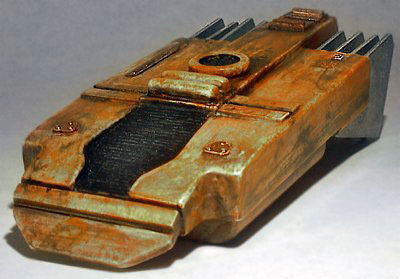
MysteriousObject1.jpg Write a description of this object for an eBay listing. (Click on it for a larger image.) Tell what it is and what it does, the condition of it, any problems you've had with it, warnings you think might be useful before someone purchases it. (The size isn't obvious from the picture so you may assume it's any size you want.)

Tuesday, March 13, 2007

Ocean angels

angelwing.jpgCut out the following words. Shuffle them about to form colorful combinations. Use your favorites in a writing piece (prose or poetry).
milky
confetti
green
apple
radiant
photographs
angels
silver-bullet
gold
glow
ghostwhite
blueviolet
paint
ocean
frost
smoke
oppression
grape
lollipops

Sunday, March 11, 2007

"Dull women ..."

Not sure what happened to the quote. I know I made a JPEG for it but obviously never saved it. Until I get a chance to do it again, here's the text version:


Dull women have immaculate houses. - Anonymous


(Though not all women with immaculate houses are dull. Those who can do it all and have clean houses are just irritating --- or have cleaning services ;-)

Saturday, March 10, 2007

Weekend 8: A break

cat_hammock.jpgA break from the mystery writing.

We have the technology now: a brand new old computer. Next week we'll be working on Weekend 7 so we're a bit behind.

Just do it

howiwrite.jpgKat's favorite author is Janet Evanovich and her Stephanie Plum bounty hunter series. We've been reading her How I Write: Secrets of a Best Selling Author.

Like most writing books you come away with lots of what to do and not so much how, perhaps because the how is so individual most authors can't really explain it in a way that sets off light bulbs for others. But it is funny like her books and there is some good encouragement.
"For thirty years I'd been telling myself stories and I'd never once put one on paper! I knew nothing about the business of writing. Didn't know any writers. Didn't have any skills. Had forgotten how to punctuate a sentence and hadn't a clue how to write dialogue. So, armed with all this ignorance, I set out to write a book. My first attempt was horrible and embarrassing. Ditto the second. The third book was less horrible, and I'd gotten beyond embarrassment. Still couldn't sell anything. The thing is, I discovered I loved the process. I had a supportive family and my Jersey belligerence kicked in. I hung in there and kept trying to get better ... and ten yeas after I made the decision to write a book, I finally sold one (Hero at Large.)"
Discipline Essentials

Write something every day, even if it means getting just a few sentence on the screen. Here are a few different ways to accompish this:
  • Do it by time. Start small, if you want. Start with five minutes and increase the time b five minutes a day. In two weeks, you'll be sitting at your desk for about an hour a day. Add more time as you choose.
  • Do it by pages. Start with one paragraph a day and work toward a page a day. If you do only that, by year's end you will have written 365 pages.
  • Do it by word count. Plan to write a specific number of words each day. Hemingway wrote around five hundred words a day -- approximately two pages. In his short lifetime (Hemingway died at sixty-one), those two pages a day produced nine novels and a bunch of short stories -- with plenty of tikme out for game hunting and fishing.
  • Do it by appointment. Treat writing like any other part of your daily routine. Carve out a place -- the corner of a room or the kitchen table -- and a certain time of each day for writing. Then show up for work.

Thursday, March 08, 2007

Fireball scream

Fireball.jpgWrite a paragraph that has something to do with each of the following words. Have the first sentence begin with the first letter, the second sentence begin with the second letter. But don't use the word in the paragraph! Do as many as 10-15 minutes allows.
fireball
scream
amazon
mouse
velvet

Tuesday, March 06, 2007

Curious ferocity

ferocious.jpg

Begin a sentence with the first word of the pair and end it with the last. If you need to change the type of word (change ferocious to ferocity or fierce or ferociously) feel free.
curious . . . . . ferocious
unappreciated . . sensitive
vapid . . . . . . crazy
somber. . . . . . concise
foggy . . . . . . egotistical
dangerous . . . . considerate
willowy . . . . . capricious
hilarious . . . . mystical
blithe. . . . . . reckless
allusive. . . . . divine
dizzy . . . . . . ornery
Inspired by the Start and Stop Game at Writing Fix.

Saturday, March 03, 2007

It's like a ...

dog-that-looks-like-a-towel.jpgThis Writer's notebook idea came to me while collecting poetry ideas for Poetry Month.

Observe people and things, notice sounds, smells, and textures then write comparisons using like or as.

(The previous notebook ideas are archived at the Blogsome blog.)

Here's some quick examples I generated while at Starbucks:
slumped like a drought touched flower
chewing like a sun beaten cow
alert like a nervous cat
pony tail flat against his back like road kill
teeth clutching her lip like a clamp
pony tail like a clutch of too long sheep's wool
worrying at a nail like a cat peeling its claws
sign swaying on a corner in the wind like a drunk who has forgotten where he was headed
steaming like a teapot at a winter cafe
heavy sway of her hair like a horse's tail
hair hugging her face like a hood drawn tight

Thursday, March 01, 2007

Nom de plumage

nomdeplumage.jpgCome up with colorful pen names for writers in as many of the following genres as time allows.
Screenplay
Graphic novel
Poetry
Romance
Obituary
Adventure/Action
Western
Newspaper article (news, sports, arts, fluff ...)
Cyberpunk
Historical romance
Comics
Travel literature
Tabloid reporter
Thriller
Lyrics (country, rock, pop, opera ...)
Mystery
Religious literature
Fantasy
Gothic
Play
Horror
Regency romance
Detective fiction
Steampunk
Animal
Science fiction
Legal thriller
Children’s
Reference
Crime fiction

Top 10 Tabloid Headlines for March 2007

wwwn-coyotes.gifExcept, again, they're really from 2005 since the City Newstand list is still on hiatus.

From the City Newstand in Chicago, for writing prompts or just for fun :-)

Top Ten Tabloid Headlines from March 2005
  1. Attack of the giant baby-biting RATS! — SUN
  2. POPE GIVES OSAMA THE FINGER! — WWN
  3. MAN-MADE TORNADOES ESCAPE FROM CIA LAB — WWN
  4. ALIEN COOKBOOK FOUND . . . AND WE'RE THE MAIN INGREDIENT IN EVERY RECIPE! — WWN
  5. PIZZA WAS SERVED AT THE LAST SUPPER . . . and the pies were delivered — WWN
  6. MEET THE MOTHER OF ALL JUNK FOODS — FRIED CHOCOLATE! — WWN
  7. SPANISH ARMADA WAS SUNK BY UFOs —WWN
  8. FRENCHMAN JAILED FOR TAKING BATH — WWN
  9. NEBRASKA DOESN'T EXIST, SAYS AUTHOR — WWN
  10. Tough guy walks 2 miles with a bullet in his brain — SUN

Tuesday, February 27, 2007

Masque

masque.jpgYou're afraid that your name and personality just don't fit your writing style. To help sell your work, come up with a pseudonym and an alter ego for it.

From Writer's Digest Free Writing Prompts.

You can post what you write in response to Writer's Digest prompts at their forums. There's a different folder for each prompt so the writings are nicely organized. The forum is quite active :-)

Saturday, February 24, 2007

Poop Wars

poopwars.jpgStart with any movie title. Replace one of the words with poop. Yes, it's juvenile. Yes, it's a lot of fun! :-) Some examples:
  • Poop Wars 
  • Crouching Tiger, Hidden Poop 
  • Fried Green Poop 
  • Lord of the Poops 
  • James and the Giant Poop 
  • Harry Potter and The Sorcerer's Poop 
  • Poop Hard 
  • Pooping with the Enemy 
  • Attack of the Killer Poops 
  • Adventures in Baby Pooping 
  • Poopless in Seattle 
  • A Midsummer's Night Poop 
  • The Sound of Poop 
  • Dog Poop Afternoon 
  • Monty Python and the Holy Poop 
  • The Scent of a Poop
Hard to stop once you get started! 

A preacher's daughter mentioned a similar game she played as a teen in church which was to go through the hymnal and add the words "under the sheets" to the end of the titles. Someone's mom taught this to her by adding it to song titles on the little jukeboxes at the tables in diners. :-) 

A list member's friend adds "in bed" to the end of fortune cookie fortunes. 

(It just occurred to me that I recently posted about expletives and now poop and I should do something high brow for next week to make up for it but the expletives were a whole 3 weeks ago so maybe that's enough time between ;-)

Thursday, February 22, 2007

Barn of the Blood Llama

bloodllama.jpgThese are real movie titles. Come up with a blurb for as many as time will allow.
Barn of the Blood Llama
The Astro-Zombies
Terror of Tiny Town
The Twonky
Chicken Park
Welcome to Woop Woop
Body Melt
The Devil Rides Out