
Tuesday, May 12, 2009
Wakey wakey


Monday, May 11, 2009

Thursday, May 07, 2009
Mélange

Click the picture to enlarge
- Someone is not who they're pretending to be.
- One is a breeder of cockapoos.
- One of them hates someone in the group.
- The accountant pines to be a cabaret singer.
- There has been a betrayal.
- In one's wallet is a picture of every cat they've ever owned.
- One has been known to photocopy their butt and leave it in the copy tray.
- Two are related but only one knows it. Though one of the others also knows.
- One has on edible underwear but not for the obvious reason.
- There is a love triangle and unrequited love but not the way you might think.
- In the suitcase of one are items from all but one of the others' suitcases.
The photographer and the woman in the background to the left may or may not be part of the group.
Tuesday, May 05, 2009
Radiance

"Some men of a secluded and studious life have sent forth from their closet or their cloister, rays of intellectual light that have agitated courts and revolutionized kingdoms; like the moon which, though far removed from the ocean, and shining upon it with a serene and sober light, is the chief cause of all those ebbings and flowings which incessantly disturb that restless world of waters."
Charles Caleb Colton (1780-1832)
Take that literally (though they can be women too :-).
There are people in the world, but isolated from it, who give their thoughts physical form and somehow those thoughts are changing the world.
It could be a video game. That's been done. A few thousand times ;-)
Or, better, maybe the gods or the world's designers have moved onto another project, abandoning the world which is deteriorating. It's found some have the power to influence the world through writing -- or song or art or comics or ...? And they're isolated to fix things. Voluntarily? Involuntarily? God like powers or a quiet whisper than ripples through the world?
What happens hundreds of years later? What kind of mythology is built up around the fixers? What's their explanation for the meaning behind it all? Are the fixers now a separate society, isolated from the world? Have they forgotten their purpose and don't realize they're affecting a real world? Or are people tested and sent off to be fixers, never to see their families again? Or is a fixer a 9-5 job but after work they end up hearing everyone's problems they want fixed?
Sunday, May 03, 2009

Thursday, April 30, 2009
A poem of a different color
 I love collections :-) One of Kenneth Koch's ideas in Wishes, Lies, and Dreams was to sprinkle a poem with Spanish colors (which grew into other words too).
I thought it might be fun to collect color names from many different languages. Try picking one language and not looking at the English color names. (Though some are from familiar roots and you'll be able to guess :-) Use the colors by sound. Or use the words to mean something else. What does each sound like?
In prose or poetry, create a colorful event: a festival, a holiday, a circus, nightclub, a culture drawn to bright colors. Set it in the future or past or a fantasy world. An interstellar ship trying to keep people's spirits up during the years long trip with spirited music and colorful decorations. A culture where dyes are rare so they bring out their colorful clothes only once a year in celebration of spring.
Here's what a couple of the kids did with the idea in Wishes, Lies and Dreams:
On my planeta named Carambona La Paloma
We have a fiesta called Luna Estrella.
A funny looking hombre comes to our homes.
He has four heads: a leon head, an oso head, a mono head, and a culebra head.
We do a baile named Mar of Nieve.
On this fiesta we eat platos.
That's how we celebrate Christmas on my planet.
Marion Mackles
The luna is big and clara.
The perro I saw is almost as big as a caballo.
The caballo I saw ate the manzana I had.
The estrella was as clara as the sun.
Valerie Chasse
Tuesday, April 28, 2009
Just the facts
 When I stumbled across this week's quote, it reminded me of a prompt that provides a structure for a poem (or for a brief story or character sketch).
Write a poem (or sketch) that answers the 5 Ws (+H) reporters are told to include in their stories: Who, What, When, Where, Why and How. They can be answered in any order. You can leave off one if it seems to tell too much. (Usually why.)
Here's some examples from Getting the Knack by Stephen Dunning and William Stafford. (The questions in parentheses aren't part of the poem.)
Coincidence
(who?) Our elected representative, Ms. Ludlaw
(what?) pumping voters' hands
(how?) as if they were slot-machine levers
(where?) outside Faculty Lounge
(when?) Tuesday, after school.
(why?) Next month, election.
September
(what?) Flocking toward Mexico
(when?) before Winter's first ka-choooo,
(how?) thrashing the silver air
(where?) in Ontario's gray sky,
(why?) wanting warm --
(who?) a blizzard of ducks
Sunday, April 26, 2009

Thursday, April 23, 2009
Tumbling skeltons

(If you need help with rhymes try Rhymer or Rhymezone.)
Here's an example from John Skelton who invented the form back in the 16th century:
from Colin Clout
What can it avail
To drive forth a snail,
Or to make a sail
Of an herring's tail?
To rhyme or to rail
To write or to indict,
Either for delight
Or else for despite?
Or books to compile
Of divers manners style,
Vice to revile
And sin to exile?
To teach or to preach
As reason will reach?
Say this, and say that:
His head is so fat
He wotteth never what
Nor whereof he speaketh;
He crieth and he creaketh,
He prieth and he peeketh,
He chides and he chatters,
He prates and he patters,
He clitters and he clatters,
He meddles and he smatters,
He glozes and he flatters!
Or if he speak plain,
Then he lacketh brain,
He is but a fool;
Let him go to school.
A three-footed stool!
That he may down sit,
For he lacketh wit!
And if that he hit
The nail on the head,
It standeth in no stead;
The devil, they say, is dead,
The devil is dead!
It may well so be,
Or else they would see
Otherwise, and flee
from worldly vanity,
And foul covetousness
And other wretchedness,
Fickle falseness,
Variableness
With unstableness.
And if ye stand in doubt
Who brought this rhyme about,
My name is Colin Clout.
Tuesday, April 21, 2009
Fill in the blanks

She ... from
Yesterday ... gone
While ... bright
Or ... night
No ... knows
She ... goes
Don't ... free
She'll ... be
She ... chained
To ... gained
And ... lost
At ... cost
There's ... say
Catch ... away
Dying ... time
Lose ... dreams
And ... mind
Ain't ... unkind
Finished ... mind
people ... time
All ... satisfy
Think ... pacify
Can ... brain
I ... find
I ... blind
Make ... cry
Happiness ... unreal
And ... state
I ... late
So ... far
Couldn't ... heart
Forever ... are
And ... matters
Never ... way
Life ... way
All ... say
And ... matters
Trust ... you
Every ... new
Open ... view
And ... matters
Never ... do
Never ... know
But ... know
Metaphorically speaking
 A metaphor turns one thing into another. Start with the statement:
A road is a road for cars.
and see how many roads (and paths and byways) you can come up with that carry something from one place to another.
- An artery is a road for exhausted blood leading back to the heart.
- The internet is a superhighway for spam.
- School is a potholed dull path to college that they've been promising to pave for decades.
- A river is snowmelt's road from mountain to ocean.
- Pretend is a road to anywhere.
- A lecture is a pathway to sleep.
Sunday, April 19, 2009

Thursday, April 16, 2009
Pantoum

The pattern is the even lines of one stanza become the odd lines of the next stanza. You write new even lines for the new stanza. The Malays, who invented this form, could keep this up for hours :-) You're allowed to stop with 4 or 5 stanzas :-) Here's the pattern to repeat:
OneThe last stanza pattern is slightly different. In fact you've already written the stanza. It's just repeats. Again, the odd lines are the even lines from the previous stanza. Then use the poem's first line as the last line of the stanza and use the poem's third line as the stanza's second line.
Two
Three
Four
Two copied here
(new)
Four copied here
(new)
Repeat.
(There's also an imperfect pantoum where the last stanza's odd lines can be new (like the previous stanzas) or the last lines may fall in any order.)
Here's a summary of the tips from "Getting the Knack " by Stephen Dunning and William Stafford:
- Doodle six or eight words or phrases. If you're stuck, skim a book or magazine for something that interests you. Steal lines from your own poems.
- Once you have something that interests you, ask what they remind you of, and write that. The goal is four lines.
- Think of each line as a separate unit. Not necessarily a full sentence, but a bit that can be shifted about without needing the line that followed it.
- For now begin each line with a capital letter.
- For now, leave out punctuation.
- Be alert for messages the poem is revealing as you work, rhymes, rhythms, new meanings.
- When writing the new even lines, be aware of not only the previous line, but the next line.
- Try out various rearrangements of the final lines to see which works for you.
- When you look back over it, the words on repeated lines will be the same but feel free to alter punctuation or capitalization. (Eg, a word on one line may be a name in another line, or an added comma may alter the meaning.) In the pure form, that's all you can change. In "Getting the Knack" the authors suggest allowing yourself to change tenses and spellings but caution you not to solve all your problems with exceptions.
- Tinker. Play around with it. Read it out loud and look for rhymes and rhythms.
The Larger Bowl (A Pantoum)There are links to some more examples at:
by Neil Peart
from Snakes & Arrows by Rush
If we're so much the same like I always hear
Why such different fortunes and fates?
Some of us live in a cloud of fear
Some live behind iron gates
Why such different fortunes and fates?
Some are blessed and some are cursed
Some live behind iron gates
While others only see the worst
Some are blessed and some are cursed
The golden one or scarred from birth
While others only see the worst
Such a lot of pain on the earth
The golden one or scarred from birth
Some things can never be changed
Such a lot of pain on this earth
It's somehow so badly arranged
Some things can never be changed
Some reasons will never come clear
It's somehow so badly arranged
If we're so much the same like I always hear
Chorus, so not part of the pantoum form:
(Some are blessed and some are cursed
The golden one or scarred from birth
While others only see the worst
Such a lot of pain on the earth)
Poetry -- Pantoum at About.com
Pantoum at Wikipedia
Tuesday, April 14, 2009
Blackout
 Grab a permanent marker and newspaper or magazine from recycling. Flip to a random page, preferably with columns. First scan through the text for an image that strikes your fancy. (Your poem doesn't need to begin there. It's an idea to build on.) Next, begin blacking out the words until you hit a phrase or word or piece of word you'd like to use in your poem. Read across the columns rather than straight down to mix things up.
This is a variation on the cutups done by the Dadaists . Artists cut up pictures and poets cut up articles, then pasted them randomly together.
Austin Kleon has created many (with a book of them to be published next year) and run a few contests a couple of years ago. You can see his at his blog and more at the Flickr group of Newspaper Blackout Poems for a load of examples.
Here are Austin Kleon's TIPS:
- Combine both columns into one poem—don’t just do each column at a time! It doesn’t make for a good read. Skip between the two…this allows for more interesting possibilities. You can see the winners here and here and here and here .
- Remember that Westerners read left-to-right, up-to-down. Poems read best if they follow that pattern.
- You can get around the left/right/up/down problem by connecting words with whitespace. (See an example.)
- What you are doing when making a blackout poem, in the words of Allen Ginsberg, is “shopping for images.” Nouns and verbs make the best images.
- Regardless of where it’s located in the text, I always start a poem by looking for a word or image that resonates with me and move from there.
- It’s a lot like a word search.
- You don’t have to use the whole text. What to leave in / leave out / how long is the magic.
- Poetry doesn’t have to be serious!
- Try not to think to hard about it and let it flow! It might take you a bunch of tries. Don’t be intimidated! Anyone can do it!
August
September
October
November
Sunday, April 12, 2009

Thursday, April 09, 2009
Alphapoetically

Write a poem where each word begins with the next letter in the alphabet. (You can also write a paragraph or really long sentence if you wish.)
Andopholus Brown could devour entire fieldsOkay, pretty awful! ;-) More prose than poetry, but the words flowed out more easily than I thought they would. (Feel free to use words beginning with "ex" for X.) It's a nice short exercise since you only need 26 words, and with some work, an actual readable poem might emerge!
Grown heavy in July.
Kranky Luscious munched near open plains
Questing restlessly.
Soon Tontubulous Urvin would xray yellow zebras.
Some other ideas:
- Write from Z to A.
- Create a 26 word poem with each letter of the alphabet but allow any order.
- Make a list of alphabetized words or phrases about a subject (animals, your dog, restaurants, Star Trek technobabble ...). You could put 3 per line and challenge yourself to see if you can make them rhyming couplets (each pair of lines rhymes).
Unskilled Poet, and these at the Rock, Waves, Beach blog, all written by Kate An Alphabet Poem, Another Alphabet Poem, A December Alphabet Poem, Knitting Alphabet Poem..
Tuesday, April 07, 2009
Ritualized
 A ritual is a series of actions meant to bring about or prevent an event. A ritual gives a sense of control over the unseen forces shaping our lives. In the past the actions and order were created by shamans. Today, anyone can devise a ritual. (As many sports players and teams do! Like Top 10 Sports Traditions ;-)
 Come up with a ritual for some event you (or your characters) would like control over. (It can be a simple prose list or a poetic list.)
Ron Padgett in Handbook of Poetic Forms (where this idea comes from) suggests:
- Decide what you would like to have occur.
- Examine all aspects of the subject.
- Think of actions to illustrate some of these aspects.
- Write each action down as a command.
- Number the commands.
- Let yourself go.
- Build a snowman with a big head.
- Give the snowman's head a large mouth.
- Catch salmon, skin the carcasses, freeze them.
- Hack away at the frozen fish and push the pieces into the snowman's mouth.
- Afterward, have a big feast in which all the pieces of fish are eaten.
More:
This reminds me of the experiments performed by B.F. Skinner. He placed pigeons in boxes and randomly released food. The pigeons eventually began performing whatever random action they had been performing before the food was released, suggesting a type or ritual or superstition.
"One bird was conditioned to turn counter-clockwise about the cage, making two or three turns between reinforcements. Another repeatedly thrust its head into one of the upper corners of the cage. A third developed a 'tossing' response, as if placing its head beneath an invisible bar and lifting it repeatedly. Two birds developed a pendulum motion of the head and body, in which the head was extended forward and swung from right to left with a sharp movement followed by a somewhat slower return."
Coloring all over the lines
 For this poetry warm up, put a color in each line. Try starting with just one color.
This will free you to see the color in not only objects but sounds and smells and numbers and feelings.
As the warm up to the warm up, Koch dropped some keys on the desk and slapped the desk with a ruler and asked the kids what color those were. He asked them what was the color of France, England and Spain; of Monday and Wednesday and the number fourteen hundred.
From Wishes, Lies, and Dreams: Teaching children to write poetry by Kenneth Koch.
Sunday, April 05, 2009

Thursday, April 02, 2009
Like a window

Similes compare two unlike things to call your attention to similar aspects you wouldn't have seen. They help you see things in new ways.
Though both similes and metaphors are figures of speech, difference is similes keep the two ideas separate: The thief escaped as fast as a cheetah, and metaphors turn one thing into another: When the starter's pistol cracked, she was a cheetah freed from its cage.
Similes in Poems at Writing Fix generated the following. In either poetry or prose, expand on one of the ideas. Explore the similarities between the trait and the noun. Don't worry about whether your comparisons are working! Just get them out and down. Let them flow. Make multiple comparisons for the same aspect so you have more to work with in the edit.
Alternatively, make them all about one person and expand each a little. Explore how they all work together.
And, as always, don't feel tied to contemporary times or human characters.
- His obedience was like a window.
- Her need for revenge was like the desert.
- His loyalty was like a tavern.
- Her face was like a train.
- His sadness was like a lighthouse.
- Her scream was like a song.
- His anger was like a card game.
- Her fear was like a museum.
Egg moon
 This is an idea from Wishes, Lies, and Dreams: Teaching children to write poetry by Kenneth Koch.
A bit pressed for time, here's my explanation from 2007 when I introduced them:
"In his book he has a whole series of what he calls poetry warm ups. It's a way of getting some thoughts down on paper that might with some rearranging, cutting and editing, become a poem or the seed of a poem.
Some are templates, so each line begins the same. Some are the seed to write a series of related ideas. Most have some repetition in them to help get things flowing. Don't be discouraged if your first dozen lines or more are trite. That's just the clogs coming out of your creative pathways :-) But that stuff needs to get out onto paper so the path can be freed for better ideas to flow more freely."
In addition to the regular writing prompts, I'll post one of these warm ups too.
Today's warm up is comparisons.
Include "like" or "as" in each line. The lines can be all about the same thing, or about one subject, or all different.
Some examples of templates:
______ is like ______.
______ is as ______ as ______.
Here are some examples from kids in Kenneth Koch's class:
A butterfly is like a flying rainbow.
Clouds are like flying ice cream.
Hair is like spaghetti.
The sun is as red as a fire.
The moon is like an egg.
Slow is like vanilla ice cream.
A moon is like a banana.
Thunder is like bowling.
Black ink is dark as m idnight.
Snow is as white as the sun shines.
A rose is as red as a beating of drums.
Tuesday, March 31, 2009
Black cascade
 Free write today. Cut these up, pick one and start writing.
Black Cascade
The Lonely Ones
Everyday Demons
Burn Halo
Before The Flood
Hills And Valleys
King Baby
Serpent Servant
Quiet Nights
Living Thing
You Are Here
Defy Gravity
Tomorrow begins National Poetry month :-)
Sunday, March 29, 2009

Thursday, March 26, 2009

Tuesday, March 24, 2009
12023 Gifts

What do you find inside?
Thursday, March 19, 2009
Show of hands

Instructions of what to write are hidden in the purple. Do one step at a time to release you from concern about where a piece might be headed. You're not concerned about story. You're just doing one step at a time.
So don't peek ahead! Highlight one box at a time (the last line is split in two so highlight both). (If for some reason that doesn't reveal the text, just copy and paste one line at a time into your document.)
- Describe someone's hands.
- Describe something they're doing with their hands.
- Someone else enters the scene.
- Describe your character's emotions about this new person just through their hands.
This was inspired by "A Creative Exercise in 5 Steps". Her steps are different, more open ended.
The slide show is from Guido Danielle. There are more examples at his website.
Tuesday, March 17, 2009
There once was a guy named Saint Patrick

The limerick packs laughs anatomicalLimericks are 5 lines, with an aabba rhyme.
Into space that is quite economical.
But the good ones I've seen
Hardly ever are clean
And the clean ones so seldom are comical. -- Anonymous
The rhythm is easy to catch once you've read plenty of good limericks. (There is a clear and succinct description below, though.) The Limerick Data Base has a big collection where submitted limericks are scrutinized for meter.
So on this great day for Saint Patrick,
Whip out your computer and write quick.
Tap out some fierce verse.
Though beat be adverse
It all can be cleaned with a mouse click.
More
In 1924, a series of responses to the famous (clean ;-) Nantucket limerick appeared in various newspapers. Those are preserved at Yesterday's Island and new ones have been added to continue the saga. Here's the original four:
There once was a man from Nantucket,
Who kept all of his cash in a bucket,
But his daughter, named Nan,
Ran away with a man,
And as for the bucket, Nantucket.
—Princeton Tiger
But he followed the pair to Pawtucket,
The man and the girl with the bucket;
And he said to the man,
He was welcome to Nan,
But as for the bucket, Pawtucket.
—Chicago Tribune
Then the pair followed Pa to Manhasset,
Where he still held the cash as an asset,
But Nan and the man
Stole the money and ran,
And as for the bucket, Manhasset.
—Exchange
Of this story we hear from Nantucket,
About the mysterious loss of a bucket,
We are sorry for Nan,
As well as the man—
The cash and the bucket, Pawtucket.
—Pawtucket Times
The following is a very good description of the limerick meter:
Dylon Mirti wrote 10/10/95
I don't know if you're the authorityWhat I really need to know is whether or not syllable cramming is allowed, or whether the exact number of syllables MUST equal the assigned number for the line. And, is there an exact number of syllables assigned for each line?
That will impart the absolute truth to me
But I'm not really sure
Just what is the structure
Of the limericks I'm slaughtering brutally.
Is it just 8 8 5 5 8
Or is it 8 8 6 6 8
Can syllables be crammed
And more than eight be jammed
To keep the meter read at the same gait?
My girlfriend and I can't tell
What makes these little rhymes swell
Please write me back
And teach me the knack
Of writing a limerick well!
Thanks for your time.
======
Dylon, of course, gets a gold star for this well-written request.
For expediency, Toast Point did not phrase his reply in limerick form, but it covered the bases nonetheless:
The number of syllables is not as important as the beat pattern:
da DA-da-da DA-da-da DA-(da) (da)Meaning that you can leave off the syllables in parentheses, but 1,2 and 5 should match each other, and 3 and 4 should match.
da DA-da-da DA-da-da DA (da) (da)
da DA-da-da DA (da)
da DA-da-da DA (da)
da DA-da-da DA-da-da DA (da) (da)
For instance:
There ONCE was a GIRL from nanTUCKet - leaves off the final (da)
A MAIDen whose NAME was feLIcity - uses all of them
It's more important that the STRESSES of the word be on the strong beats than to have exactly the right number of syllables.
Monday, March 16, 2009
Happy 15

But, anyway, here's the results with catchy succinct definitions that are more likely to stick with you than standard definitions :-) (Though, admittedly, the opportunity to use the words won't crop up too often ;-)
From Anu Garg:
Last week's contest to define the words in 15 letters generated tremendous enthusiasm. Many teachers discussed the contest in their classes and shared definitions from their students. More than 2000 readers sent one or more entries filled with creativity, humor, and lateral thinking.
It wasn't easy to select the winners from so many outstanding suggestions. Listed below are the winning entries which have each gained an autographed copy of one of my books.
Subintelligitur
Winner:
An idea alluded to. -Karyl Davis (karyl.davis lackland.af.mil)
Honorable mentions:
- Don't say it. I get it. -Virginia Davidson (vdavidson50 hotmail.com)
- Kenned sotto voce. -Chiron (chiron godhammer.com)
- You should know it. -Susan Frost (richandsuzi yahoo.com)
- Virtually stated. -Albert D. (filiquark yahoo.com)
- Obvio sin decirlo. -Steven Fuller (sfuller garfieldre2.org)
- Ca va sans dire - duh! -Margaret Cox (mocox1 cox.net)
- No words required. (Anu Garg's worst nightmare!) -Monica Porterfield (mporterfield mltvacations.com)
- Obvious ergo mute. -Paul B. Calico (pbcalico strausstroy.com)
- Don't spell it out. -Brianna Sims (brianna.sims gmail.com)
- Read my lips, dummy. -Jonathan Danilowitz (jon-dan 013.net)
- Under the liminal. -Daniel Pesta (towardus comcast.net)
- Doesn't need sayin'. -David Honigmann (david_honigmann mckinsey.com)
- Said but not aloud. -Jonathan Weiss (jweiss1999 aol.com)
- Feel it in my bones. -Edie Bonferraro (edieb mailbug.com)
- A tacit knowledge -Rachel Blau DuPlessis (rdupless temple.edu)
- Shhh. I understand. -Justin Peniston (moose0225 aol.com)
- I get your message. -Judith Henderson (judyframehend aol.com)
- I comprehend. *Wink* -Dan Marlowe (sisyphus42 gmail.com)
- No need to mention. -Julie Southern (southernbookworm hotmail.com)
- You know, I know, shh! -Liza Levy (sparkydoc kyk.net)
- Inferred w/o a word. -Jeff Miller (jdmiller milligan.edu)
- Don't need to say it. -Gabby Kissane (gkissane gmail.com)
- The ways of a woman. -Gordon Havens (gordonhavens hotmail.com)
- Many readers sent these suggestions:
- Between the lines
- Not said, but known.
- Don't tell me - I know!
- Not said, yet known.
- Implicitly known.
- Heard but not said.
- Ya know what I mean.
- Known sans speech.
Lepidopterology
Winner:
To see life flit by. -Julie Paschkis (jpaschkis comcast.net)
Honorable mentions:
- Life after cocoon. -Edie Bonferraro (edieb mailbug.com)
- Study of flitters. -Rebecca Haaland (rebecca emsp.no)
- About winged bugs. -Vaishali Kamath (vaishalikamath hotmail.com)
- Flitterers study. -John A. Olmsted (jolmsted exchange.fullerton.edu)
- Study live jewels. -Kate Daniel (writerkate earthlink.net)
- What cute insects! -David M. Lieberfarb (dmlieb optonline.net)
- Nabokov's leisure. -Stephen Schwartz (hillendari hotmail.com)
- Study of farfalle. -Riccardo Fragnoli (riccardo.fragnoli mpsa.com)
- i.e. Geek moth-ology. -James Miller (millnjam yahoo.com)
- Focus: Flutterers. -Don Recker (dlrecker nwinfo.net)
- On gossamer wings. -Uwe Stichert (info language-coaching.net
- Splendor impaled. -Zack Fisher (zackipooh gmail.com) [He adds: While this is not the actual definition of lepidopterology, I remember thinking just that the first time I saw a butterfly collection, as a child.]
- Buttermothology. -Judi Jones (judith.jones pncbank.com)
- Science a-flutter. -Nyree Sharp (nyree_sharp yahoo.com)
- Wee wing scrutiny. -Daniel Watson (dwatson illustratus.com)
- Etude de papillon. -Gabby Kissane (gkissane gmail.com)
- Re Papilionoidea. -Joe Dickey (joetdickey yahoo.com)
- Study of cute bugs. -Terence Singh (terencesi nedbank.co.za)
- Winged bugs study. -Jonathan Osborne (jono fullemployment.org)
- Ciencia Mariposa. -John Connors (john.connors cengage.com)
- Of the mothly crew. -Vicki Boyd (vickeeb gmail.com)
- Volar bug studies. -Stephanie Hollenback (stephanietraylor hotmail.com)
- Look! On the flower! / Look! Near the lamp! -Jeanne Landkamer (jeanne.landkamer metc.state.mn.us)
- Moth examination. -Laura Richens (lrichens tulane.edu)
- Many readers sent these:
- Fluttery studies.
- Butterflies et al.
- Moth scholarship.
- Moth and kin study.
Mathematicaster
Winner:
2nd rate math geek. -Greg Foster (lokesman gmail.com)
Honorable mentions:
- Ramanujan manque. -Eric Towne (etowne bates.edu)
- A minor math major. -Howard Distelzweig (howard_distelzweig pall.com)
- He divides by zero. -Peirce Hammond (Peirce.Hammond ed.gov)
- Rounds pi to three. -Joselyne Gonzalez (joselyne yahoo.com)
- Uneven math maven. -Catherine Masters (cmasters schiffhardin.com)
- He's no Pythagoras. -Jacquie L Lowell (jlowell.improv juno.com), Dave Zobel (dzobel alumni.caltech.edu)
- Two plus two's five. -R. Ganesh (r.ganesh iflexsolutions.com)
- No Euclid or Gauss. -Devika Nair (devikanair1979 hotmail.com)
- Digits: all thumbs. -Jason Morgan (aeelectra yahoo.com)
- In-add-equatician. -Brendon L. Etter (better carleton.edu)
- Can do two plus two. -Matt Schmidt (mschmidt hussoninc.com)
- Math challenged. (I could have made it "maths challenged" but I prefer the irony of the above.) -Alan Broom (alan.broom macquarie.com)
- Numbers Are Not Us. -Colleen (argonauta4 aol.com)
- IQ's greater than pi. -Bill Ward (bill wards.net)
- Bank executive, e.g. (not a timeless definition, but it works currently). -Aaron Long (aarondavidlong hotmail.com)
- Just a calculator. -Tal Cohen (tal forum2.org)
- One does not add up. -Mike Freedman (mike freedthinkers.com)
- A nonplussed soul. -K. F. Turtletaub (doctorkf verizon.net)
- Calculably unfit. -John Hudspeth (johnhudspeth windstream.net)
- Big sum, small mind. -Caroline Murphy (ckmurphy54 hotmail.com)
- An amateur at math. -John P. Marhin (john.p.marhin mainroads.qld.gov.au)
- 0 < x < a math savant. -Greg Foster (lokesman gmail.com)
- 99 percent of folk. -Kassy Daggett (kdaggett efn.org)
- rkathleendillon. -R Kathleen Dillon (rkdillon verizon.net)
- Math isn't my forte. -Kevin Ogburn (kevin.ogburn co.hennepin.mn.us)
- Calculating Risk. -David Lehner-Smith (david.lehner-smith target.com)
- Small-time mathmo. -Owen Biesel (owenbiesel gmail.com)
- Number numbskull.
- Math geek wannabe.
- No good at numbers.
- A numbers bumbler.
- A numbers fumbler.
Dermatoglyphics
Winner:
Digital printout. -Judith Bill (jgb22 comcast.net)
Honorable mention:
- How callous are we? -Will Whetzel (wwhetzel mssadvisors.com)
- Palm/foot reading. -Jeff Miller (jdmiller milligan.edu)
- Epidermis scrawl -Kathleen (stidmama yahoo.com)
- Digital imagings. -Jason Nabi (jhn8d virginia.edu) and Wendi Dumbroff (penelopey aol.com)
- Unique digital ID. -Ian Hoffman (Ian.Hoffman usdoj.gov)
- Skin cartography. -K. Sahasranaman (k.sahasranaman gmail.com)
- No hands are alike. -Sophia S. 6th grader, Community Middle School [sent by James Eng (james.eng ww-p.org) who encouraged his class to try this week's contest and shared their many entries]
- Skin crop-circles. -Matthew Planchak (panqike gmail.com), Alexis Abraham (cawaaahome aol.com)
- No two are the same. -Mike Hansen (mfh papermc.com)
- The skin's pattern. -Carly, 4th grader [in Erin Allen's class (eallen howell.k12.nj.us)]
- Study of skin ruts. -Peter Kidwell (peter.kidwell cox.net)
- Skin's hills, dales. -Noël Lee (noellee free.fr)
- Palmar, plantar ID. -Lisa Hyatt Cooper (lhcooper verizon.net)
- Skin deep studies. -Kenneth Kirste (kkkirste sbcglobal.net)
- Think whorl piece. -Matt Schuette (schuette79 hotmail.com)
- What OJ fears most. -Analiese van den Dikkenberg (sandad hotmail.com)
- Hand- or footprint.
- Extremity prints.
- Finger, toe prints.
- Skin ridges study.
Infundibuliform
I had not asked for 15-letter definitions for Monday's word, but some readers sent them nonetheless. Here are a few selections:
- Tapered like a 3-D V. -Louis P. Nappen (nappen comcast.net)
- Just like a conoid. -Julie Davis (julie.davis ssa.gov)
- Tornado-ish shape. -Mike Riley (mr.mikeriley gmail.com)
- Swirls into point. -Susan Frost (richandsuzi yahoo.com)
- Hourglass halved. -Don Recker (dlrecker nwinfo.net)
- It's funnelicious! -Keith Parsons (khp38120 aol.com)
- Smaller at one end. -Joe Trivers (joe_trivers amat.com)
- A Happy Fifteenth. -Mike Weinert (weinert.mike bls.gov)
- I wish you the best. -Michel Cornelissen (mjm.cornelissen gmail.com)
- Best wishes to all. -BranShea (via Wordsmith Talk bulletin board)
Sunday, March 15, 2009

Thursday, March 12, 2009
Talk to the animals

Do you ever wonder:
- what your cat thinks of you?
- where your dog ran off to?
- whether your bull has forgiven you for having him castrated?
- what your cat means when he barfs in your shoe?
- why your horse threw the last race?
- whether your sheep are satisfied?
Consultations can be face to face with you, face to muzzle with your pet, through a photograph or artifact when a corporeal form might be too difficult to produce. All provide portals to your animal's spirit.
I also offer counseling by phone, on line, email, fax, text, IM. When I speak about your pet to you remotely, I am linked psychically through your pet's name, like a radio frequency I can tune into.
Take that any direction you're inspired to take it, from Amy's point of view, her brother's, a client's, a dissatisfied client's, an desperate investigating officer, Amy's psychiatrist ...
Tuesday, March 10, 2009
Fanaticizing
 Last week you destroyed the local bad guy who held your village in fear for the past year. (The bad guy can be an evil wizard, thug, alien invader, dragon, whatever you wish. You can be a good wizard, fighter, clever strategist, ninja, again whatever you wish.)
You've received accolades, a parade, free drinks, a feast, letters of thanks. Today you received your first actual fan letter. As you read the gushing praise, it becomes increasingly disturbing. This person is obsessed with you. They may be more dangerous to you than the bad guy.
Write the fan letter.
Sunday, March 08, 2009

Thursday, March 05, 2009
Jack the Giant Murderer
 Jack, of the beanstalk fame, has been charged with breaking and entering, larceny, and first degree murder.
Choose from one of two points of view:
As Jack's lawyer, present Jack's case on why the charges should be dropped. Argue from a legal standpoint rather than an emotional one. Being a big mean giant -- from Jack's point of view! -- will not stand up in court.
Or, as a reporter covering the trial, describe each character's view of the crime as it unfolds in court.
Tuesday, March 03, 2009
Propagopoly

Shake up your imagination. The cat edition uses cat breeds instead of streets, kitty favorites (mouse, catnip, fishbowl) for the Chance, toys (yarn, box, scratching post, paperbag) for Utilities. The Coke edition has pewter Coke bottles and truck.
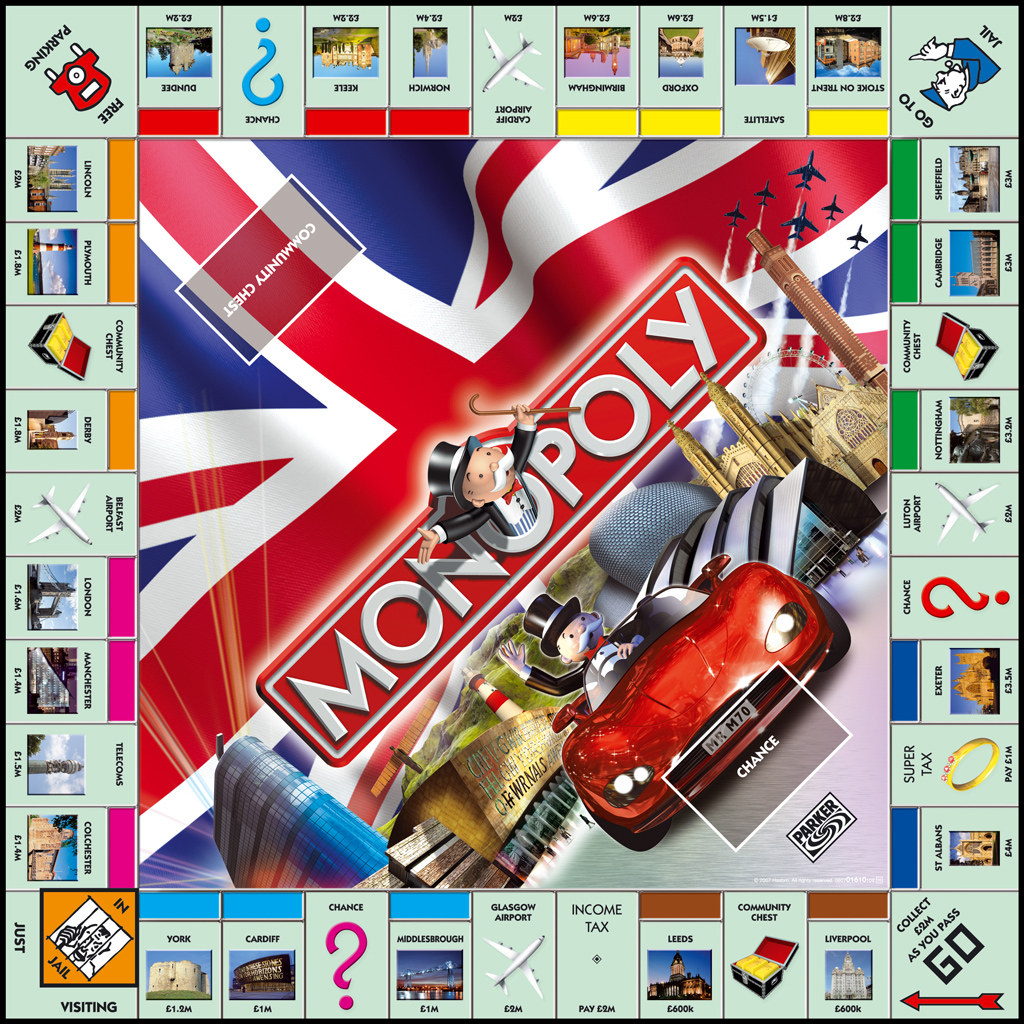
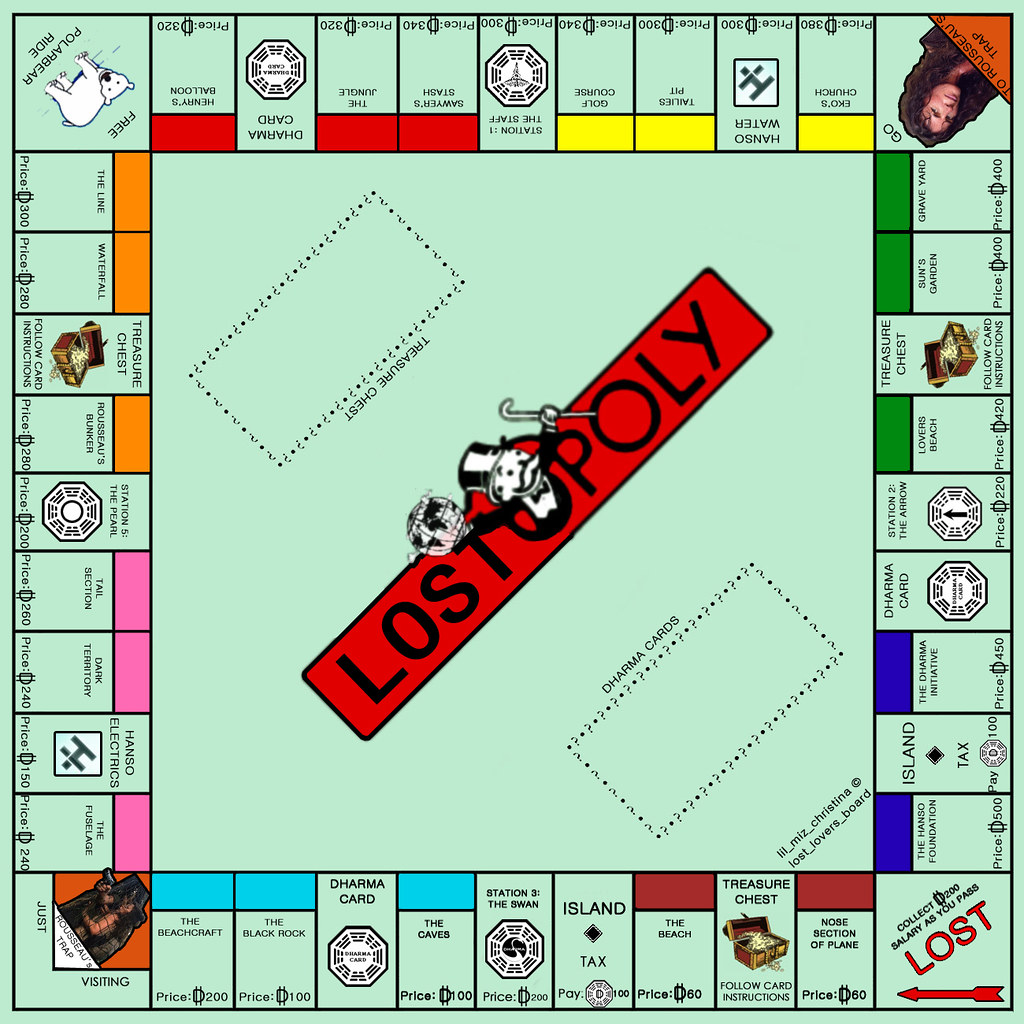
Some large images of Monopoly boards:
Here and Now: World Edition
Googlopoly
United Kingdom
Beatles
Cat lovers
Star Blazers
Lostopoly
| (go) | |
| (community chest) | |
| (income tax) | |
| (railroad) | |
| (chance) | |
| (jail/visiting) | |
| (utility) | |
| (railroad) | |
| (community chest) | |
| (free parking) | |
| (chance) | |
| (railroad) | |
| (utility) | |
| (go to jail) | |
| (community chest) | |
| (railroad) | |
| (chance) | |
| (luxury tax) | |
| (pewter token) | (pewter token) | (pewter token) | (pewter token) | (pewter token) | (pewter token) | (pewter token) | (pewter token) | (money) | (hotels) | (houses) |
Sunday, March 01, 2009

Thursday, February 26, 2009
Raining salamanders and frogs

Two salamanders, one brand new to the job and an older salamander, are eating a late lunch in a sidewalk cafe. Normally they spend their time in a floating ship amidst the clouds. Now they're down experiencing the weather. Take it from there.
Have the salamanders been appointed? Are they born into the job because of special skills? Have they seized the job because they think they know what the best weather is?
Tuesday, February 24, 2009
Dancing with the fairies

“Come Fairies, take me out of this dull world, for I would ride with you upon the wind and dance upon the mountains like a flame!” -- William Butler Yeats
Be careful what you wish for! Your character needn't be William Butler Yeats ;-) but take him or her on a wild ride. Will he decide dull is good? Will one fairy take pity on him? Will he get the best of them in the end?
Saturday, February 21, 2009

Thursday, February 19, 2009
It's alive
Write from the point of view of an assembly robot.
Here's some in action. What's interesting, especially in the first video, is that they aren't all moving at the same time so it gives the illusion of independent thought.
Here's some in action. What's interesting, especially in the first video, is that they aren't all moving at the same time so it gives the illusion of independent thought.
Tuesday, February 17, 2009
Hurdy-gurdy
 Reduplications are words containing repeated sounds. The following are some rhyming reduplications.
Use them in order in a story.
boogie-woogie
even Stephen
herky-jerky
hurdy-gurdy
walkie-talkie
nitty-gritty
hootchy-kootchy
willy-nilly
yoo-hoo
hanky-panky
super-duper
abracadabra
mumbo jjumbo
teeny-weeny
namby-pamby
heebie-jeebies
handy-dandy
okeydokey
fan-tan
hobnob
tepee
razzle-dazzle
Sunday, February 15, 2009

Thursday, February 12, 2009
Pig headed conjugations

I am firm.
You are obstinate.
He is a pig-headed fool.
Use that pattern to conjugate more "verbs" -- actually adjectives! -- irregularly, going from flattery to insult. Begin the first with I, the second with you and the last with he or she.
Make up your own or use the following for inspiration:
concerned
beautiful
imaginative
affectionate
Inspired by The Play of Words: Fun & Games for Language Lovers by Richard Lederer.
Tuesday, February 10, 2009
Grand entrance

Notice how it changes the feel of the situation and the characters acting in the mini drama.
As a bonus, try changing the noun to see how that affects the sentence's feel. Give the characters names. Change their sexes or species.
"No," she said and walked from the room.
He took the book from the bag and sat on the couch.
She touched the object the man had held.
He pulled out the bottle and drank.
She saw him then reacted.
Sunday, February 08, 2009

Saturday, February 07, 2009
1000 Verbs to Write By

Strong verbs not only enliven writing but can bring out character. Think about the difference between a character who slinks from the room and one who tramps. Of course it's easy to go overboard trying to never use the same word twice. Better to rewrite so the first mention of the movement goes a long way.
Advice on substitutes for said is all over the board. Some say never because dialogue should be written so the speaker and tone is clear. Some say rarely use said because it's repetitious. As a reader I'm fairly oblivious to the word said and only want reminded who's speaking. As a writer, I occasionally substitute said when there's something extra going on that won't come through in the dialogue like "rasped" or "whispered." One thing to watch out for is writing dialogue like "WATCH OUT FOR THE TIGER!" Sebastian shouted when it's obvious he's shouting.
As a fun exercise the writers on the list came up with a slew of Said substitutes several years ago that has surprisingly few repeats from Deanna's list.
1000 Verbs to Write By
by Deanna Carlyle
All the writing advice in the world can't replace good tools and lots of practice. This is why I've compiled the following list of over a thousand action verbs. I needed a handy, printable reference tool that didn't strain my eyes or my wrists. Try it for yourself sometime. It works.
| For "walked" or "ran" lumbered plodded scurried sidled slinked/slunk proceeded wended scuttled went on his way shuffled scuffed scuffled stumbled shambled waddled wobbled scooted slouched scrambled scampered minced trotted strolled sauntered ambled marched stepped paced roamed roved meandered shadowed pursued trekked continued on drifted past/along strayed glided along strode stalked stomped strutted swished swaggered stamped tramped trudged traipsed trod/treaded/trodden limped hobbled lurched staggered tripped crawled crossed traversed inched across hurtled galloped charged darted advanced approached bushwhacked chased climbed crept along, crept away sneaked/snuck tiptoed stepped lightly pussyfooted dashed danced pranced descended ascended dodged edged eluded emerged entered evacuated escaped evaded fled flitted flew hauled off groped his way launched across scaled lunged moved paraded passed patrolled plowed prowled propelled pursued raced sailed rushed sidestepped skidded skipped stole stomped steered swerved veered listed trampled ushered waded wandered hiked withdrew ambulated perambulated absconded trailed after bolted tore tore along made rapid strides covered ground sprinted careered scudded hastened raced hurried jogged cantered loped tripped took flight decamped drifted For "reacted" reeled back rocked back flushed blanched blushed scowled nodded her consent nodded his agreement smiled grinned grimaced fell silent shrugged and said admitted with a nod shook his head beamed smirked simpered listed tilted swayed keeled over flinched shivered sniffed blinked retracted sighed exhaled inhaled flicked flung reclined shifted relaxed swallowed pouted looked + adj. yielded hesitated made no attempt to frowned made no answer fell silent paused stared gasped started startled slackened reclined drew back stepped back stiffened resisted retreated raised an eyebrow cocked her head to one side put her head to one side tilted her head chuckled yawned laughed snickered giggled stifled a yawn stifled a laugh took a deep breath glanced off glared shrugged devoid of emotion grinned sneered For "said" uttered mumbled drawled parroted echoed said half-aloud snarled blurted moaned muttered murmured cooed whispered crooned hollered shrilled sassed prompted questioned demanded queried replied suggested responded sang out scoffed screamed yelled yelped shouted inquired chirped squealed squeaked asked herself asked assured commanded cried out exclaimed advised announced growled stuttered stammered instructed told jeered scolded lamented mocked objected questioned roared speculated snapped spat stated whined jabbered prated prattled gibbered cackled gabbled sputtered blathered rambled on rattled on maundered digressed sermonized preached came out with declaimed pontificated harangued ranted rhapsodized gushed spouted let slip enlightened him pointed out chatted revealed boasted crowed vaunted bragged disparaged belittled notified addressed blabbed nattered bantered yakked whispered wondered aloud rejoined retorted replied recited repeated remarked came out with conveyed declared summoned imparted mentioned added put before revealed let out divulged disclosed made known vented aired breathed betrayed recited predicted advanced averred avowed avouched assumed imagined professed claimed purported insinuated cited named offered proposed pleaded imputed implied asserted expressed pledged ascribed affirmed professed admitted | For "jumped" vaulted leapt/leaped pounced startled flinched sprang lunged launched jerked jolted erupted exploded shot from For "took" drew withdrew pulled out a picked selected chose plucked removed snatched out scooped up rooted out snatched trapped took up raised picked up hoisted set upright elevated seized prized open wrenched wrested produced extracted extricated accepted fetched grabbed snitched took hold of jimmied gathered grasped gripped fingered nabbed packed ransacked appropriated swiped snared dragged acquired obtained gained procured garnered gleaned pilfered lowered took down tore down swapped For "pulled" pulled out removed took out extracted produced tugged extricated lugged drew dragged yanked For "pushed" propelled ballasted set in motion drove trundled shoved thrust pressed forward made one's way squeezed through roused prompted forged ahead For "put" stashed placed posed posited plunked down mounted positioned stationed set before dropped crammed stuffed stuck lodged plopped plunked parked stationed planted perched inserted lay set set upright stood on end upended deposited consigned relegated strapped tossed threw flung lobbed hurled heaved cast slapped onto draped dunked eased shifted interposed installed For "looked, saw" glared glanced off regarded made out descried remarked had in sight glowered squinted shot him a look fixed her with a stare sighted ogled cast a glance his eyes begged her to amplify gazed gaped spotted surveyed turned an eye on looked upon distinguished fixed her gaze on noted recognized identified took a look took a glance stared leered scowled scanned peered squinted gaped noticed observed considered watched viewed took in studied examined inspected scrutinized perused sized up took stock of skimmed glanced through flipped through perceived discerned beheld watched for looked on eyed detected contemplated kept in sight held in view stood guard kept watch monitored For "thought, remembered" wondered asked herself pondered noticed reflected struck her as entertained the notion held in one's mind It occurred to her It came to her realized knew she considered. she considered this. he was tempted to brought to mind he was taken with the idea that she reasoned understood considered went over reviewed pictured featured imagined pretended hoped feared envisioned deliberated envisaged called up conjured up conceived of fancied allowed the conceit judged suspected intended expected planned concentrated mused ruminated recalled mulled over brooded over projected anticipated concluded esteemed took heed kept in mind guessed supposed formed an image of conjured hatched fabricated fashioned formulated concocted reasoned that turned it over in her mind flirted with the idea recollected bore in mind deduced inferred thought back to put her in mind of called to mind reminded her of acknowledged weighed reconsidered thought better of For "felt, seemed, showed, looked like" sensed had the impression understood detected seemed appeared betrayed indicated betokened foretokened revealed bespoke suggested signified connoted hinted at alluded to implied intimated presaged portended forewarned disclosed displayed lay open made manifest exposed bared struck her as looked as if looked like had the look of had every appearance of had the earmarks of resembled sounded like exhibited evidenced showed manifested emblematic of | For "touched" clutched pawed gripped grasped took hold of adjusted felt manipulated maneuvered twiddled palpated palmed handled thumbed rummaged through caressed fondled stroked grazed rubbed tugged squeezed scratched pinched patted tapped tamped rapped brushed bedaubed dappled dabbed swept across scraped glanced alighted pressed wrung kneaded shoved gouged grazed prodded ticked trapped jabbed poked pressed probed goaded twisted wedged pried prized open pry/pried pulled pushed primped preened rattled pumped mangled massaged felt flattened smoothed scooped up flicked flipped flogged fondled groped handled held knifed mauled tapped drummed wiggled worked stubbed scoured scrubbed For "had, held" bore exhibited showed displayed betrayed wielded carried was furnished with contained wore sported spanned suspended grasped gripped clutched contained toted possessed retained embraced evinced For "hit" beat socked bumped clapped thumped lashed pummeled punched rammed crashed thwacked slapped smacked pumped impacted attacked hacked swiped swung trounced tackled For "was, were" stood sat took up perched lay hung took place contained spanned loomed occupied remained stayed persisted befell (happened) bechanced occurred happened For "sat" slumped eased into lowered himself sank into sat himself was seated plopped down crouched squatted hunkered down roosted perched settled straddled sat astride sat bestride reposed leaned reclined lolled lounged sprawled lodged For "stood" got to his feet jumped up rose rose to his feet got up remained upright held herself erect stationed herself For "smelled" got scent of sensed sniffed detected snuffled snorted inhaled scented snuffed breathed in savored perceived discerned reeked stunk assaulted the nostrils For "tasted, drank" savored relished nibbled at tried sipped gulped took a deep swallow chewed ingested ruminated sampled sank his teeth into bit into crunched melted licked slurped chugged smacked suckled sucked swigged swilled chomped ground munched gnawed rended quaffed imbibed tippled nipped supped drained washed down swilled down guzzled down lapped up soused quenched For "heard" overheard caught detected picked up perceived apprehended eavesdropped listened listened in gathered heard tell of strained her ears harked harkened attended to took heed of took in gave audience to gave an ear to lent an ear to heard him out within earshot out of earshot For "lie down, lay" reclined eased onto flopped onto lay prone lolled luxuriated lay prostrate lay recumbent lay back rested reposed lazed sprawled lounged slouched slumped For "entered" stepped inside went in came in sailed in burst in set foot in/on broke in forced her way in intruded penetrated passed into For "left, exited" ran off walked off went out departed retreated decamped deserted repaired retired withdrew quit took off fled sallied forth bowed her way out For "turned" wheeled around twisted to one side whirled about rotated spun on her heels pivoted revolved swiveled reeled trundled circled eddied swirled sheered veered shifted divagated angled off shunted |
Copyright 2004 by Deanna Carlyle at deannacarlyle.com
Thursday, February 05, 2009
Zipperface

- The Stars Fell on Henrietta
- Zombies on Broadway
- Sometimes They Come Back ... Again
- Zipperface
- You'll Like My Mother
- Wrestling Women vs. Aztec Mummy
- Vampire Cop
- Vacuuming Completely Nude in Paradise
Tuesday, February 03, 2009
Frosty fennel frappes

Monday, February 02, 2009





Subscribe to:
Posts (Atom)