 |
| #19 19 Images you won't believe aren't Photoshopped |
Sunday, November 03, 2013


Wednesday, October 30, 2013
Mad reaper
 |
| Reaper mimes |
Why? What idea or practice is this grim reaper rebelling against? Is it about the job? Is it personal? Why now? What has changed to prompt it? Why her or him?
Has a reaper rebelled before? If not, why? If so, why? What was the outcome then? How will it affect how the death world responds to this reaper?
What would "going rouge" mean for a reaper? Typically reapers collect the souls of the dead. Is the reaper not collecting? Not delivering?
Is that all reapers do in the world you're imagining? Do they have other tasks? Has something become more important to this reaper than collecting souls?
Are deaths pure chance or does someone or something determine how long someone's life is? Is that process part of the reaper's choice to go rogue?
Monday, October 28, 2013
Sunday, October 27, 2013

Friday, October 25, 2013
Megaload of character flaws

I stumbled across a good therapy-based resource of childhood-based damage that can be useful for character flaws.
If you want to jump right in, it's pretty straightforward.
If you want to dig deeper to connect the ideas to enrich your backstory, that needs some explanation. I'll try to organize the pieces so you need to read as little as possible to use it, but so it all fits together into an understandable whole :-)
To find flaws for your character there are 2 sets of lists. The first, Flawed Thinking, is common attitudes. The second, Flawed Coping Strategies, is common strategies for coping with a life someone feels powerless to change, including 2 lists of flawed thoughts that reflect a coping strategy. You can use either or both.
Flawed Thinking
2 questionnaires. The titles is scary. The questions aren't! Schema Questionnaire long form (has more questions) short form (easier to score. Though t's not necessary. (Described below.)) |
Flawed Coping Strategies
A list. There are 3 main strategies, Surrender, Avoidance, Overcompensation. Each is broken down into more specific strategies. Common Maladaptive Coping Strategies And 2 questionnaires. These thoughts connect (through the scoresheets) to the above strategies. (Surrender has fewer ways it plays out.) Avoidance questionnaire And a scoresheet. Overcompensation questionnaire And a scoresheet. |
| Samples from the questionnaires "I have to take care of the people around me." "I don't feel much when I remember my childhood." "I try to do my best; I can't settle for 'good enough.'" "I get defensive when I'm criticized." |
Most people have some of these thoughts occasionally. But when a person filters his life through them, they turn into shackles limiting what he'll allow himself to do, preventing him from becoming who he could be.
| Example If someone bases her self worth on how much others need her, she may inflate how necessary she is, unconsciously trapping herself in her role (as leader, as mother, as the go to person). She can't take a break because she believes everything will fall apart without her. She also can't take a break because subconsciously she fears everything won't fall apart, that people will carry on just fine without her. Or she may make herself necessary by holding tight to essential information that would allow those dependent on her to be independent. |
Or you could dig deeper into why he bound himself. What lies ahead is fascinating but dangerous territory! ;-)
Digging deeper
Warning
Digging deeper is dangerous for two reasons. First, it seems like a great idea to create a full person then let them play out their life. But a story is the greater whole created by the resonance between flaws, journey, and character transformation. To get the pieces to resonate with each other, each needs to be loose enough to adjust to changes in the others. A life, on the other hand, is a random collection, like musical notes thrown on a page that only pure luck will make a song.
Second, because the juicier the background, the more tempted you'll be to write about how your character became flawed. As much fun as it is for a writer to explore who a character is, it's not so much for the reader. The reader wants to know how your character handles getting her heart's desire while handicapped by demons, not how the demons formed. (Though telling the backstory can make a great extra for your author website!)
Backstory creates a richer flaw for your protagonist to overcome. But backstory in the story should be like an iceberg: a few provocative sentences revealing it but mostly hidden beneath the surface.
Moving on ...
Well, that warning out of the way -- which I still find tempting to ignore ;-) -- the "truths"your character chose from the (Schema) questionnaire tie to unmet needs in her childhood in two ways. (You can score the questionnaire to find this stuff out, but first an explanation of what it tells you.)
Humans are born with the expectation that their needs for food, security, affection, belonging will be met while they're young and dependent. (The first 4 levels of Maslow's Hierarchy of Needs.) For tiny humans all are as essential for growing straight and true as the first.
Warping world view (Maladaptive Schemas)
So, firstly, if a child's expectations are repeatedly crushed, to cope she may warp her view of the world, of other people, of herself. The warping affects her expectations and how she interprets what happens to her.
These are Early Maladaptive Schemas, 18 different ways to warp world view. Don't be frightened by the title. ;-) Think warping lens.
She might see the world through Abandonment, shutting down trust that others will be there for her. She might see the world through Subjugation: knowing life will be much easier if she keeps her needs and emotions hidden.
Coping with a warped world view (Maladaptive Coping Strategies)
Then, secondly, the child might disfunctionally cope with her world view in three ways, by Surrendering, Avoiding or Overcompensating (as mentioned up at the top of the post). (The link gives lots of examples, all of which you'll recognize like aggression, manipulation, withdrawal.) These choices lessen the pain but don't fix the situation and may, overall, make life worse.
If she Surrenders, she accepts she has no control over how people see her or treat her. She might, for example, become dependent, a people pleaser, conflict avoidant.
If she Avoids, she escapes or blocks out what she doesn't want to deal with by, among others, withdrawing, drugs, hyper-busyness.
If she Overcompensates, she pours extra energy into something she can control or excel at to compensate for lack of control or failure in another area. This might be things like hostility, status seeking, neat freak.
Pulling out more from the Schema questionnaire
| The harder pull, if you filled out the Schema Questionnaire completely (which really is overkill) you can rank each of the schemas by doing some adding and dividing, described here. This is where the short form is easier since to find an average, you divide each section by 5. For the long form, there's a different number of questions for each schema. It's all described at the link. |
There's only 15 because they identified 3 more schemas after creating the questionnaires. The 3 that aren't included are:
- Approval-Seeking/Recognition-Seeking
- Negativity/Pessimism, and
- Punitiveness.
Also ...
Additionally there's a Parenting Inventory to get a picture of each parent's role in warping their child's view. And a scoresheet.
And finally ...

 , that walks you through your own character flaws -- or your character's character flaws. There are also many case studies in the book for a clearer grasp of how all these ideas play out in real live people.
Wednesday, October 23, 2013
Her mother's eyes

She had her mother's eyes.
Literally.
Take it from there.
Or play with it. Get a big sheet of paper. Write "She had her mother's eyes." in the center. Scribble down possibilities for who "she" might be. For who her mother might be. For "had". For how. For why.
Why her? Why her mother? Why eyes?
Change she to he.
Change mother to father. Or sister, brother, cat, king, ship, mentor, boss ....
Change eyes to hair, wand, hands, cargo ... liver ....
Monday, October 21, 2013
Sunday, October 20, 2013

Wednesday, October 16, 2013
The dog days of summer

What kind of dead person is being asked? Who is able to speak to this dead person? Or is it a rhetorical question? Or is it not a person? Not a human?
The obvious answer is Dad would be unhappy. But what if he isn't? What if he's happy? What if he's relieved it's finally happened? What if he's royally pissed? At the dead offspring? At the killer?
Quote from Vampire Diaries.
Monday, October 14, 2013
Sunday, October 13, 2013

Wednesday, October 09, 2013
Tweebio

Try juxtaposing your hero and your antagonist's bios. Have them write up bios for each other in response. Have your secondary characters write bios for themselves and the main characters.
A handy tool is Characters Counter that keeps a running count as you type. (If that disappears, Google "160 character counter". Yes, apparently bios get 160 characters. Tweets are limited to 140. But wouldn't that mean a long bio would get truncated if retweeted? Hmm.)
Of course people are collecting best Twitter bios! 20 of the World's Most Clever Twitter Bios is a good start with links to several other collections.
Here's a sampling:
- I was named after a mythological being ... how would you feel?
- A man of mystery and power, whose power is exceeded only by his mystery.
- Marc is a man with a dream. A very simple dream, mostly involving nachos and beer, but a dream nonetheless.
- Currently starring in my own reality show titled, A Modern Cinderella; One Girl’s Search for Love and Shoes.
- I’m Kail, I was given a girl’s name when I was a baby because my parents are idiots.
- Former military guy & cop. Leprechauns freak me out.
- I have been called a PollyAnna, sugar-coated idealist. I like to think of myself as more optimistic than that
- Darth Vader: Community Manager for Sith Lord but tweets are my own. Asthmatic. Dad to two rambunctious Jedis. Love scrapbooking, Beyonce, and galactic domination.
- Hillary Clinton: Wife, mom, lawyer, women & kids advocate, FLOAR, FLOTUS, US Senator, SecState, author, dog owner, hair icon, pantsuit aficionado, glass ceiling cracker, TBD ...
- Tome Hanks: I’m that actor in some of the movies you liked and some you didn’t. Sometimes I’m in pretty good shape, other times I’m not. Hey, you gotta live, you know?
- Weird Al: You know... the Eat It guy.
- Anna Kendrick: Pale, awkward and very very small. Form an orderly queue, gents. Location: probably by the food.
- Lucy Hale: I drink too much coffee. And laugh too loud.
Monday, October 07, 2013
Sunday, October 06, 2013
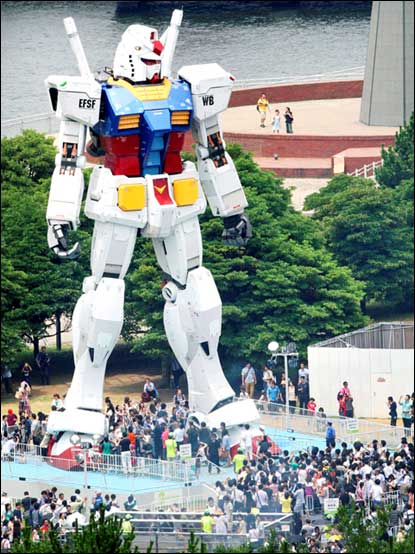
Wednesday, October 02, 2013
Steam Wars
 |
| Steam R2D2 by Sillof |
Sillof has also created Roman Wars, Faster, Empire! Strike! Strike (based on Faster, Pussycat! Kill! Kill!), Cyber Wars (has elements of Cyberpunk, the Matrix, Akira, Ghost in the Shell). Pages for those sets have images of the individual characters but no handy group shot.)


Monday, September 30, 2013
Sunday, September 29, 2013
Pagantastic
It was hard to pick one! So I picked three and you can pick one. Or go to Creative Costumes of Still-Practiced Pagan Rituals to suffer the same dilemma.
Are they beasts? Are they humans? If human, what's the purpose? Are they wearing the uniform of a tribal role such as shaman or hunter? Is it for a yearly festival or ritual? Or something else? Is their world as primitive as their outfits? (Isn't it great being a writer? :-))


French photographer Charles Fréger spent 2 years traveling across Europe documenting pagan rituals that are still being carried on which he's gathered for Wilder Mann: The Image of the Savage.
Are they beasts? Are they humans? If human, what's the purpose? Are they wearing the uniform of a tribal role such as shaman or hunter? Is it for a yearly festival or ritual? Or something else? Is their world as primitive as their outfits? (Isn't it great being a writer? :-))
French photographer Charles Fréger spent 2 years traveling across Europe documenting pagan rituals that are still being carried on which he's gathered for Wilder Mann: The Image of the Savage.
Wednesday, September 25, 2013
Take a spin
 |
| Mike Luckovich |
Monday, September 23, 2013
Sunday, September 22, 2013

Wednesday, September 18, 2013
Take a header

Loose cannon commands flagship
Secret peace keeping weapon hijacked
17,000 KILLED IN SAN FRANCISCO ATTACK
Head of Star Fleet a terrorist?
The best way to get a feel for great headlines is reading lots of headlines, good and bad. That said, I did stumble across a couple of pages from the University of Iowa School of Journalism and Mass Communication, Writing Good Heds, What Does a Good Headline Do?, Headline (or "Hed") Jargon
Monday, September 16, 2013
Sunday, September 15, 2013

Friday, September 13, 2013
Characters with potential
 |
| Mimi and Eunice |
My character has the potential to be _____.
If he has lots of potential, make a list!
If you can't think of how he could possibly be cooler, greater, better than he is, you may have created him too close to his full potential. Begin with who he was before he cleared out all the baggage that weighed him down.
Test his greatness. Push him beyond his limits. If he's happy and content, what can you take from him, put beyond his current reach, that would bust his balloons? If he's confident, what could rattle that confidence? If he's found his niche in life what would make him realize he's wrong?
Take him in the opposite direction. If he's a moral person, what could push him to become immoral? What threat to what he loves would he betray his values for, break his moral code for? What could cause him to do evil for morally-justified-to-him reasons? What would he kill for to get, to keep, to protect?
Once you have some ideas of who he could be, push who he is at the beginning -- his profession, his personality, his belief or value system, his personality, his station in life -- further away from that.
Who is as much different than who he could be at the end? Make him work hard to get to his potential!
Next: Preventing him from reaching his goal and potential. (Next Friday hopefully.)
Wednesday, September 11, 2013
Dragon tales

That idea could extend to other dads: werewolf, sea monster, vampire, ghost, orc, monsters under the bed ... What are monsters-under-the-bed for monsters-under-the-bed? You could write a whole series of short monster stories.
Monday, September 09, 2013
Sunday, September 08, 2013
Deadly reading
 |
| #15 16 More images you won't believe aren't Photoshopped |
Friday, September 06, 2013
Toxic quality
 "Once you realize you're not going to die or get covered in toxic sludge, it's pretty relaxing." *
Take it from there.
Try the 5+1Ws and 1H of journalism. (The extra W, the What if?, is non-standard for journalism but can help you did deeper.)
Who
Who is the speaker?
Who is the listener?
Who else might be listening?
Who else is doing this activity?
Who is interested in doing this?
Who is worried about the activity?
Who else might be connected to the place or activity?
Who is involved in this activity
Who else is asking questions about the activity?
Who is affected by the activity, by the questions and by the answers?
Who will benefit?
Who will be harmed?
What
What activity is relaxing?
What is this potentially covering toxic sludge?
What makes the activity deadly?
What created the sludge?
What created the area?
What makes the activity safe or prevents it from being deadly?
Where
Where is this toxic sludge that won't cover you?
Where is the place the toxic sludge was created?
Where is this place that looks deadly?
Where is the speaker?
Where is the listener?
When
When was this person speaking?
When did the speaker last do this activity?
When did the toxic sludge happen?
When did people start doing this activity?
When did some people start to believe it wouldn't affect them?
Why
Why is it assumed toxic sludge and death are connected to this activity?
Why is there toxic sludge?
Why would someone want to do this activity?
Why is this activity done here rather than in a place that doesn't look deadly?
Why is the activity okay here?
Why is the speaker telling a person or people about the activity?
Why do some people believe it's deadly?
Why does the speaker believe it's okay?
Or is the speaker lying? Why?
How
How did the toxic sludge and deadly quality happen?
How did the speaker come to try this activity?
How did the speaker and the listener(s) meet?
How do people do this activity?
How do they get to this place?
What if?
What if the toxic sludge hadn't happened?
What if the speaker hadn't tried the activity?
What if the activity didn't exist?
What if the listener hadn't asked?
* Quote from a news article. (I didn't include the article title since it might limit the free range of your thoughts.)
(Oops, sorry, this should have been the Wednesday post and the writer craft one on Friday.)
Wednesday, September 04, 2013
Strong flaws and flawed strengths

Choose a character trait or two from the Cattell's 16 Personality Factors post.
For each trait make two lists. One, a list of ways that trait could be an advantage in certain situations. Two, a list of ways that trait could be a disadvantage. How has the trait helped her? How has it hinder her?
Whether the trait is positive or negative, there will be both advantages and disadvantages. For advantages of negative traits and negatives of positive traits you may have to dig into her childhood. How did the trait make her vulnerable? How did the trait protect her?
If the trait hindered her or left her vulnerable in her past, did she suppress it or hide it behind a persona? For instance, did she learn to lie because the truth was often punished? Did she learn to detach because those she trusted betrayed her? Did she learn early that kindness was a weakness and so became unkind herself?
A negative trait that gave her an advantage when younger, may be a hinderance now. But she'll cling to it because it worked in the past and it's become part of her identity. It's who she is.
Your job, as your character's
To dig a bit deeper there are three story possibilities for the character traits.
It's a trait your character was born with and currently is.
She will have arranged her life to avoid facing her weaknesses. She'll limit her wants to what her strengths can get her. She may have convinced herself that any want that involves her weaknesses she doesn't really want. Mine the disadvantages list for obstacles to throw at her. While this trait will always be a part of who she is -- an introvert won't stop being an introvert -- she can learn how to work with who she is, learn strategies to overcome the disadvantages.
It's a trait your character was born with but has hidden it behind a persona that's opposite.
Forcing her to face her weaknesses will be more than just uncomfortable. She will have buried her trait beneath layers of shame or feelings of weakness. The trait may embarrass her, or dredge up unpleasant memories. It may feel alien if the trait was unacceptable in her family or community.
It's the personality trait your character is pretending to be in order to hide her true (and opposite) nature.
You'll want to make her hidden nature necessary to get what she wants, but she won't want it to come out for the same reasons as above. The advantage list is why she'll cling to her persona. Her life will be built around the advantages. It's your job to take them away. It's your job to put her through the wringer of her disadvantages to get that most wanted thing.
Though this post works perfectly fine as a standalone exercise, the previous post on character development is Wrangling your character into story worthiness. The next is Characters with potential (will be posted on Friday).
Cattell's 16 Personality Factors for writers
If you've checked into schemes that categorize personalities, most sort them into good and bad extremes. It takes some imagination to add depth and nuances.
Raymond Cattell sorted personality words into more or less of a factor. Which, even if personality researchers ultimately reject it, is much easier to work with for writers!
Play around with the 16 factors until you find something you like. Look for connections, contrasts and conflicts. A cold empath? Enthusiastically absorbed by ideas? Uninhibited, self absorbed and careless of social rules?
Edit: I made a few changes in the order and added a few words. Now if you read across the top 4 in each category, it's a spectrum with 2 negative extremes on either end and 2 positive though opposite traits in the middle.
I made some changes to Cattell's list. I suspect some words have shifted meanings since Cattell listed them, such as, critical meant evaluating but is now commonly used to mean condemning. So, I added a few words, removed a couple, and moved one. I listed his "5 Global Factors" under the categories where they seemed to best fit with the 16. (They're global because Cattell felt they fit several categories.)
The "way too" words in the columns to left and right I added. These aren't traits people are born with. Environment or life events warped the person in these directions. These are also where characters have the potential for the most (story) growth.
HISTORY: Back in the 1930s Gordon Allport collected 17,953 personality words -- by scanning through the dictionary! He whittled them down to 4505. Cattell whittled them further to 171 then categorized them.
Raymond Cattell sorted personality words into more or less of a factor. Which, even if personality researchers ultimately reject it, is much easier to work with for writers!
Play around with the 16 factors until you find something you like. Look for connections, contrasts and conflicts. A cold empath? Enthusiastically absorbed by ideas? Uninhibited, self absorbed and careless of social rules?
Edit: I made a few changes in the order and added a few words. Now if you read across the top 4 in each category, it's a spectrum with 2 negative extremes on either end and 2 positive though opposite traits in the middle.
Randomize the 16 Personality Factors
The 16 Personality Factors
(Based on Cattell's 16 Personality Factors)
Way too little
|
Less
|
More
|
Way too much
|
|---|---|---|---|
WARMTH
| |||
| anti-social | connected to self | connected to others | intrusive |
| unkind | reserved | warm | smothering |
| cold | impersonal | outgoing | nosy |
| uninvolved | distant | attentive to others | |
| cool | kindly | ||
| detached | easy going | ||
| formal | participating | ||
| aloof | likes people | ||
| self-centered | sociable | ||
| ungenerous | friendly | ||
| socially inhibited | compassionate | ||
| helpful | |||
| nurturing | |||
EMOTIONAL STABILITY
| |||
| obsessive | excitable | calm | unresponsive |
| frenzied | emotionally reactive | emotionally stable | emotionally shut down |
| hysterical | affected by feelings | mature | |
| fickle | emotionally less stable | faces reality | |
| histrionic (dramatic) | changeable moods | adaptive | |
| easily upset | unsentimental | ||
| high strung | impartial | ||
DOMINANCE
| |||
| passive | cooperative | assertive | domineering |
| drone | deferential | forceful | dictatorial |
| avoids conflict | dominant | antagonistic | |
| submissive | aggressive | vindictive | |
| humble | competitive | vengeful | |
| obedient | stubborn | unforgiving | |
| easily led | bossy | hostile | |
| docile | willful | ||
| accommodating | |||
| subdued | |||
| compliant | |||
| agreeableness | |||
LIVELINESS
| |||
| apathetic | prudent | sparkly | extravagant |
| humorless | restrained | lively | undependable |
| serious | animated | whirlwind | |
| taciturn | spontaneous | ||
| introspective | enthusiastic | ||
| silent | happy go lucky | ||
| dour | cheerful | ||
| expressive | |||
| energetic | |||
| passionate | |||
| indulgent | |||
RULE CONSCIOUSNESS
| |||
| lawless | impulsive | dependable | rule bound |
| nihilist | nonconforming | rule-conscious | moralistic |
| anarchist | disregards rules | conscientious | judgmental |
| dishonest | self indulgent | conforming | critical |
| manipulative | disobedient | staid | |
| unrestrained | self-controlled | ||
| expedient | dutiful | ||
| responsible | |||
SOCIAL BOLDNESS
| |||
| inhibited | modest | uninhibited | attention seeker |
| reclusive | threat-sensitive | socially bold | blind to social cues |
| agoraphobic | timid | venturesome | self-aggrandizement |
| hesitant | thick skinned | ||
| easily intimidated | can take stress | ||
| shy | |||
SENSITIVITY
| |||
| insensitive | objective | sensitive | hypersensitive |
| utilitarian | aesthetic | manic | |
| unsentimental | sentimental | ||
| tough minded | tender minded (tender hearted) | ||
| self-reliant | intuitive | ||
| no-nonsense | refined | ||
| rough | empathetic | ||
| resolute | receptive | ||
| determined | histrionic | ||
| open-minded | |||
VIGILANCE
| |||
| gullible | trusting | skeptical | prejudiced |
| naive | unsuspecting | vigilant | cynical |
| accepting | suspicious | biased | |
| unconditional | distrustful | ||
| easy | oppositional | ||
| uncooperative | |||
ABSTRACTEDNESS
| |||
| unimaginative | practical | imaginative | out of touch with reality |
| grounded | abstracted | ||
| prosaic | absent minded | ||
| solution oriented | impractical | ||
| steady | absorbed in ideas | ||
| straightforward | idealistic | ||
PRIVATENESS
| |||
| gossip | forthright | discreet | secretive |
| blabbermouth | indiscreet | private | |
| artless | non-disclosing | ||
| open | shrewd | ||
| guileless | polished | ||
| unpretentious | worldly | ||
| involved | astute | ||
| genuine | diplomatic | ||
APPREHENSION
| |||
| arrogant | confident | concerned | fear-bound |
| unworried | apprehensive | ||
| complacent | self doubting | ||
| secure | worrying | ||
| free of guilt | guilt prone | ||
| self-assured | insecure | ||
| self satisfied | self blaming | ||
| self confident | nervous | ||
OPENNESS TO CHANGE
| |||
| close minded | traditional | free thinking | novelty seeker |
| fear of the unknown | attached to familiar | experimenting | sensation seeker |
| dogmatic | conservative | liberal | |
| respecting traditional ideas | analytical | ||
| consistent | critical (evaluating not censorious) | ||
| cautious | open to change | ||
| conventional | flexible | ||
| pessimistic | optimistic | ||
| predictable | inventive | ||
| seeker of answers | asker of questions | ||
| unpredictable | |||
| surprising | |||
| curious | |||
| self-transcendent (seeing self as an integral part of the universe) | |||
| adventurous | |||
SELF-RELIANCE
| |||
| leech | group-oriented | self-reliant | tightfisted |
| self-sacrificing | affiliative | solitary | loner |
| people pleasing | a joiner and follower | resourceful | selfish |
| narcissistic | dependent | individualistic | greedy |
| extrovert (gets recharged being with others) | self sufficient | rude | |
| accommodating | introvert (needs alone time to recharge) | ||
| selfless | independent | ||
| generous | self-interested | ||
| self-monitoring | self-focused | ||
| other-focused | |||
| altruistic | |||
| humble (modest) | |||
| considerate | |||
| tolerant | |||
PERFECTIONISM
| |||
| oblivious | flexible | perfectionist | obsessive |
| chaotic | big picture oriented | organized | hoarder |
| tolerates disorder | compulsive | workaholic | |
| undisciplined | self-disciplined | hyper-focused on flaws | |
| lax | socially precise | ||
| self-conflict | exacting will power | ||
| careless of social rules | controlled | ||
| uncontrolled | self-sentimental | ||
| seeker of 'good enough' | careful | ||
| focused on what's working | deliberation | ||
| unexacting | persistence | ||
| simplicity | |||
| thorough | |||
| seeker of 'the best' | |||
| goal oriented | |||
| success oriented | |||
| efficient | |||
| focused on what's not working | |||
TENSION
| |||
| apathetic | relaxed | tense | overwrought |
| indolent | Type B | Type A | |
| listless | placid | high energy | |
| torpid | tranquil | impatient | |
| patient | driven | ||
| composed | frustrated | ||
| low drive | high drive | ||
| easy going | time driven | ||
| low anxiety | high anxiety | ||
| relaxed | tense | ||
| imperturbable | perturbable | ||
| well-adjusted | |||
REASONING
| |||
| concrete thinking | abstract-thinking | ||
| lower mental capacity | more intelligent | ||
| less intelligent | bright | ||
| slow learner | higher mental capacity | ||
| fast learner | |||
I made some changes to Cattell's list. I suspect some words have shifted meanings since Cattell listed them, such as, critical meant evaluating but is now commonly used to mean condemning. So, I added a few words, removed a couple, and moved one. I listed his "5 Global Factors" under the categories where they seemed to best fit with the 16. (They're global because Cattell felt they fit several categories.)
The "way too" words in the columns to left and right I added. These aren't traits people are born with. Environment or life events warped the person in these directions. These are also where characters have the potential for the most (story) growth.
HISTORY: Back in the 1930s Gordon Allport collected 17,953 personality words -- by scanning through the dictionary! He whittled them down to 4505. Cattell whittled them further to 171 then categorized them.
Monday, September 02, 2013
Subscribe to:
Posts (Atom)