Thursday, July 09, 2009

Moony for the moon

Write a love letter to the moon.

Maybe you're a dog or a werewolf or some other creature of the night.

Maybe you've returned from a galactic trip where other moons are lumps of rock. (Our large round moon that perfectly eclipses the sun may actually be quite unusual!)

Maybe it's the moon of your own world and not Earth's your love letter is to.

Maybe the moon is a methaphor for something else you're in love with.

Maybe the moon was a constant in your life when nothing else was.

Maybe the moon was full on several wonderful events in your life.

Maybe you've been Moonstruck :-)

I should have posted this Tuesday when the moon was full but it's just 2 days past. So go check it out :-)

Tuesday, July 07, 2009

Strip and Knit With Style

The Bookseller has been giving out the Diagram Prize for Oddest Book Title of the Year since 1978.

They deliberately don't look at what the book is about so as not to be influenced by reason and sense. ;-) The titles are being judged on their own merits.

Pick a couple of titles and write a blurb or review of the book the title inspires for you. (Note, if you're doing this with kids, read through the list first so you can make adjustments for your kids' tastes! ;-)

This year's winner: The 2009-2014 World Outlook for 60-Milligram Containers of Fromage Frais

A selection of past years' winners and some nominees:

  • The Rape-Sponge Cucumber
  • Strip and Knit With Style
  • What do Socks do?
  • Bombproof Your Horse
  • Sex After Death
  • Toilets That Make Compost
  • All Dogs Have ADHD
  • How to Shit in the Woods: An Environmentally Sound Approach to a Lost Art
  • The Large Sieve and Its Applications
  • Deathing: An Intelligent Alternative for the Final Moments of Life
  • A God or a Bench
  • Children Are Like Wet Cement
  • People Who Don't Know They're Dead: How They Attach Themselves to Unsuspecting Bystanders and What to Do About It
  • Malformed Frogs
  • Waterproofing Your Child
  • Male Genital Organs and Their Improvement
  • The Madam as Entrepreneur: Career Management in House Prostitution
  • Techniques for Corrosion Monitoring
  • The Care and Feeding of Stuffed Animals
  • Versailles: The View From Sweden
  • The Emotional Life of Contemporary Public Memorials
  • Egg Banjos from Around the World
  • The Industrial Vagina

Thursday, July 02, 2009

Captive audience

(Click to enlarge)

What conversation do you overhear around this event? Is the child the only one talking? Or are the bears contributing?

Tuesday, June 30, 2009

Last things first

"But what in the world do they want a trumpet for?"

It's the last line of a movie. But use it as your first line (of a story, poem, play, movie, dialogue ...)

Thursday, June 25, 2009

Humoresque

Hippocrates believed moods and behaviors were caused by the balance of four bodily fluids (called humors): blood, yellow bile, black bile, phlegm. During the Renaissance, Shakespeare and other authors based characters on the four humors or temperaments. It's good to have a balance in real life, but for characters it's good to be unbalanced :-)

Come up with some characters based on the four humors. Set them in a situation together and see what happens.

Sanguine (blood, cheerful)
A sanguine person is generally light-hearted, fun-loving, a people person, loves to entertain, spontaneous, leadership abilities, and confident. However they can be arrogant, cocky, and indulgent. They can be day-dreamy and off-task to the point of not accomplishing anything and can be impulsive, possibly acting on whims in an unpredictable fashion.

The temperament is associated with the season of spring, the qualities of warm and moist, the element of air. Various modern equivalents are: artisan, improvisor, artistic, innovative, changeable.

Synonyms: cheerful, confident, optimistic, assured, hopeful, buoyant, in good heart

Choleric (yellow bile, enthusiastic)
A choleric person is a doer. They have a lot of ambition, energy, and passion, and try to instill it in others. They can dominate people of other temperaments, especially phlegmatic types. Many great charismatic military and political figures were cholerics. On the negative side, they are easily angered, bad-tempered, mean-spirited, suspicious and angry.

The temperament is associated with the season of summer, the qualities of warm and dry, and the element of fire. Various modern equivalents are: idealist, catalyst, religious, doctrinaire, inspired.

Synonyms: irate, testy, hot-tempered, fiery, irritable, quarrelsome

Melancholic (black bile, somber)
A melancholic person is a thoughtful ponderer. Often very kind and considerate, melancholics can be highly creative – as in poetry and art - but can become overly pre-occupied with the tragedy and cruelty in the world, thus becoming depressed. A melancholic is also often a perfectionist. This often results in being unsatisfied with one's own artistic or creative works and always pointing out to themselves what could and should be improved.

The temperament is associated with the season of autumn, the qualities of cold and dry, and the element of earth. Various modern equivalents are: guardian, stabilizer, economic, traditional, industrious.

Synonyms: languid, spiritless, gloomy

Phlegmatic (phlegm, calm)
A phlegmatic person is calm and unemotional. While phlegmatics are generally self-content and kind, their shy personality can often inhibit enthusiasm in others and make themselves lazy and resistant to change. They are very consistent, relaxed, rational, curious, and observant, making them good administrators and diplomats. Like the sanguine personality, the phlegmatic has many friends. However the phlegmatic is more reliable and compassionate; these characteristics typically make the phlegmatic a more dependable friend.

The temperament is associated with the season of winter, the qualities of cold and moist, and the element of water. Various modern equivalents are: rational, theorist, theoretic, skeptical, curious.

Synonyms: unemotional, indifferent, cold, heavy, dull, sluggish, matter-of-fact, placid, stoical, lethargic, bovine, apathetic, frigid, lymphatic, listless, impassive, stolid, unfeeling, undemonstrative

There's a chart that categorizes the traits and strengths and weaknesses of each:

If you'd like to see the mixture of humors in your character (or yourself) there's a personality test.

The Divided Kingdom by Rupert Thomson is about a world where people are isolated into quarters by personality type. I'm seeing some inherent conflict there in a land filled with leaders but no followers and thinkers but no doers.

Tuesday, June 23, 2009

The growler

Anu Garg of Wordsmith.org sent out a week of words that have multiple and varied meanings. Growler had 5 definitions:
  1. One that growls.
  2. A container brought by a customer to fetch beer.
  3. Small iceberg pieces less than 5 meters at the waterline get their name from the sound they make when they plunge down into the water when oscillating in sea swells.
  4. A four-wheeled cab.
  5. An electromagnetic device for testing short-circuited coils.
Use all the meanings in a single writing piece.

If five isn't enough for you, here are some informal definitions sent by readers of the Word A Day newsletter:
  • A student who can't sing in tune.
  • The sound box put inside "talking bears."
  • A Victorian-era slang word for a sausage (at least so says James P. Blaylock in his novel Homonculus)
  • A slang term for a pork pie (in Yorkshire, in the North of England).
  • A very large clam (at least it is in Phillip Craig's mystery series set on Martha's Vineyard (an island off the coast of Massachusetts)).
  • A station to station telephone that employs a small hand crank to produce a growling noise at the called station (US Navy).
  • A large-mouthed black bass.
  • A diesel locomotive.
  • Translucent messages and icons that appear on a computer screen for a short time.
  • Pre-fabricated burgers once served at the student cafeteria at Memorial University of Newfoundland; for their obvious effect once ingested.
  • A heavy, fast food meat pie in Northern England that can cause quite severe indigestion.
  • Portable electric toilets used by wilderness guides in areas such as the Grand Canyon.
  • A slang meaning I've often heard for this word is 'outhouse'. Also portable toilets.
  • A bathroom.
When you're done "Dave from Maryland" illustrated the five meanings at Word A Day.

Thursday, June 18, 2009

WHAT did you say?

What are these guys thinking? Write a caption or a bit of dialogue.

Tuesday, June 16, 2009

Phasma symphonizing

A friend passed on some spam with words that caught my eye.

phasma symphonizing
vertebration riddled

I like the sounds of phasma and vertebration. Each sounds like it is several concepts bundled up snugly together.

Play with those. Let the sounds of phasma and vertebration and the combinations take you where where they will in free form writing for 10 minutes or so.

When you feel the ideas fading, check out the real definitions (and I thought they were made up words!) for a recharge for a few more minutes.

When you're done, go back and circle your favorite phrases. See if you can arrange them into a poemish creation.

Thursday, June 11, 2009

Fear and loathing

What does your character ...

... fear?
... dread?
... want?
... want to avoid losing?
... want to avoid gaining?
... love?
... desire?
... need?
... crave?
... hate?
... loathe?
... have a passion for?

If your character doesn't want something badly, there isn't much reason to read about them.

"As God is my witness, I'll never be hungry again." -- Scarlett O'Hara

While in real life happiness is a great thing, it's boring in a character ;-) Their desire needn't be a huge thing like saving the world. It can be simple personal quest like recreating Mom's lost recipe for cherry pie or a war on the invading bedbugs.

This can work for a current character, a dropped character you were fond of but couldn't make work, a brand new character.

(The above words are intentionally similar to need. Some words may feel the same to you. That's okay. We each have slightly different connotations for words and words you feel are the same may spark very different ideas in someone else.)

Tuesday, June 09, 2009

Ace of spades

Come up with a new deck of cards for current times, a fantasy world, a future world, for your own or someone else's world. J.K. Rowling showed us wizarding chess. What do their cards look like? Who or what is on them? What do Goth cards look like? Klingon? Robot? (They all probably exist! ;-)

You can stick with the standard 52+Joker deck of 4 suits or not. (Not to be practical on you or anything ;-), but I suspect a number close to 52 is easy to shuffle. The 65 cards in Five Crowns is tough! So maybe your characters have larger hands if you decide to have more cards or they have some technique to get around that.)

So, what suits have meaning for your world? Will you use something other than numbers? Do you have a set corresponding to the royals?

From Caffeine for the Creative Mind: 250 Exercises to Wake Up Your Brain by Stefan Mumaw and Wendy Lee Oldfield


Did you know?

The kings in the French decks represent actual kings? King David (spades), Charlemagne or Charles IV (hearts), Julius Ceasar (diamonds), Alexander the Great (clubs). So do the queens and jacks (knaves).

The Ace of Spades picture is usually much larger for a reason? The cards in Europe were taxed and that's the card chosen for the tax stamp.

That the ace, which used to be the lowest card, trumps the king probably came about during the French Revolution when the peasants revolted against the king?

There's way more than you thought to question about playing cards :-)

Tuesday, June 02, 2009

Little Red Zombiehood

Turn Little Red Riding Hood into a zombie story. Is she the zombie? Is she a zombie fighter? Who represents the wolf? And who the grandma?

An old prompt to turn Jack and the Beanstalk into a vampire story inspired this and I wasn't even thinking of the mashup Pride and Prejudice and Zombies: The Classic Regency Romance - Now with Ultraviolent Zombie Mayhem! but it looks very cool!

Thursday, May 28, 2009

The gateway


Did you stumble across this? Or were you directed here?

Was the picture taken before entering, or just after, facing back where you came?

Does the archway lead where it seems to, or is it a portal?

If you enjoy abandoned places, Web Urbanist has a massive collection of photos grouped by type.

Tuesday, May 26, 2009

Till death

I overheard, "Analen's getting married."

And my whole life changed.

Take it from there.

Or, alternately, take it many places from there. See how many beginnings you can come up with.

Thursday, May 21, 2009

Pyrophobic firefighter

On slips of paper, write down a dozen occupations that fit with your preferred writing genre. If you're expanding beyond contemporary, you don't need to stick with firefighter and doctor so you can throw in zombie hunter or holodeck author. But, even on Mars, they'll have fires and someone needs to fight them. :-)

On another set of slips write down personality quirks (like kleptomaniac, no sense of humor, or superstitious).

Draw one from each set and use the combination as the inspiration of a character or three. Match them up and see what happens.

Brainstorm on the quirks for a bit. You'll be surprised what starts coming out once you allow yourself to loosen up.

If you want to add in some quirks from someone else's brain: 100 character quirks you can steal from me and 100 character traits you can totally steal from me part II. And a phobia list with a bit of story to set them up.

Tuesday, May 19, 2009

Home theater

Tell the story of a house from the house's point of view. What do houses care about? Not the same things as the parasites -- er, symbiotic lifeforms living in them ;-)

How have the people through the years used and abused the house. How have they altered it, improved it or let it decay? What invaders (termites, squirrels ...) have moved in? What's it feel like to the house when the roof leaks (and to be helpless to fix it when people ignore it!) Any walls or floor ripped out or basement dug up to hide secrets? Ghosts? Good or bad karma left in the house? What about the surrounding house "friends" who have come and gone? What about the new "kid" on the block?

Saturday, May 16, 2009

Murder of crow(d)s

Ben Shott writes about words for the NY Times with an occasional weekend competition.

This weekend's competition is to come up with new collective nouns for modern nouns. Collective nouns are the words for groups like pride of lions and murder of crows.

Here's his description:
Many of the collective nouns with which we are familiar can be found in the “Book of St. Albans,” published in 1486. This curious volume, often attributed to Juliana Berners, contains treatises on hawking, hunting and heraldry, as well as a host of, now famous, nouns of assemblage, including:

An exultation of larks; a parliament of rooks; a murmuration of starlings; a shrewdness of apes; a gaggle of geese; a turmoil of porpoises; a business of ferrets; a spring of teal; and a pride of lions.

This weekend, co-vocabularists are invited to submit novel nouns of assemblage for modern phenomena. A bucket of Wiis? A swamp of blogs? A murder of crowds?
You can add to or just check out the contributions at his blog.

(Not sure if you'll need to register to read the blog. I know you do for the NY Times articles.)

Thursday, May 14, 2009

Toe tow

Use the following homophones in sentences.

toe/tow
pidgin/pigeon
complement/compliment
manner/manor
mane/main
medal/meddle/metal/mettle
principal/principle
vain/vane/vein
pi/pie

Tuesday, May 12, 2009

Wakey wakey

Write 5-10 different scenes of a character waking up. It's natural to default to amusing grumpiness or just getting up and moving on. But dig deeper and find the quirkiness and different reactions people have to an ordinary experience.

Thursday, May 07, 2009

Mélange

Click the picture to enlarge
  • Someone is not who they're pretending to be.
  • One is a breeder of cockapoos.
  • One of them hates someone in the group.
  • The accountant pines to be a cabaret singer.
  • There has been a betrayal.
  • In one's wallet is a picture of every cat they've ever owned.
  • One has been known to photocopy their butt and leave it in the copy tray.
  • Two are related but only one knows it. Though one of the others also knows.
  • One has on edible underwear but not for the obvious reason.
  • There is a love triangle and unrequited love but not the way you might think.
  • In the suitcase of one are items from all but one of the others' suitcases.
(The group is before Al Khazneh in Jordan, the site of Indiana Jones and the Last Crusade. Feel free to use that or ignore it.)

The photographer and the woman in the background to the left may or may not be part of the group.

Tuesday, May 05, 2009

Radiance

"Some men of a secluded and studious life have sent forth from their closet or their cloister, rays of intellectual light that have agitated courts and revolutionized kingdoms; like the moon which, though far removed from the ocean, and shining upon it with a serene and sober light, is the chief cause of all those ebbings and flowings which incessantly disturb that restless world of waters."

Charles Caleb Colton (1780-1832)

Take that literally (though they can be women too :-).

There are people in the world, but isolated from it, who give their thoughts physical form and somehow those thoughts are changing the world.

It could be a video game. That's been done. A few thousand times ;-)

Or, better, maybe the gods or the world's designers have moved onto another project, abandoning the world which is deteriorating. It's found some have the power to influence the world through writing -- or song or art or comics or ...? And they're isolated to fix things. Voluntarily? Involuntarily? God like powers or a quiet whisper than ripples through the world?

What happens hundreds of years later? What kind of mythology is built up around the fixers? What's their explanation for the meaning behind it all? Are the fixers now a separate society, isolated from the world? Have they forgotten their purpose and don't realize they're affecting a real world? Or are people tested and sent off to be fixers, never to see their families again? Or is a fixer a 9-5 job but after work they end up hearing everyone's problems they want fixed?

Thursday, April 30, 2009

A poem of a different color

I love collections :-) One of Kenneth Koch's ideas in Wishes, Lies, and Dreams was to sprinkle a poem with Spanish colors (which grew into other words too).

I thought it might be fun to collect color names from many different languages. Try picking one language and not looking at the English color names. (Though some are from familiar roots and you'll be able to guess :-) Use the colors by sound. Or use the words to mean something else. What does each sound like?

In prose or poetry, create a colorful event: a festival, a holiday, a circus, nightclub, a culture drawn to bright colors. Set it in the future or past or a fantasy world. An interstellar ship trying to keep people's spirits up during the years long trip with spirited music and colorful decorations. A culture where dyes are rare so they bring out their colorful clothes only once a year in celebration of spring.

Here's what a couple of the kids did with the idea in Wishes, Lies and Dreams:
On my planeta named Carambona La Paloma
We have a fiesta called Luna Estrella.
A funny looking hombre comes to our homes.
He has four heads: a leon head, an oso head, a mono head, and a culebra head.
We do a baile named Mar of Nieve.
On this fiesta we eat platos.
That's how we celebrate Christmas on my planet.

Marion Mackles
The luna is big and clara.
The perro I saw is almost as big as a caballo.
The caballo I saw ate the manzana I had.
The estrella was as clara as the sun.

Valerie Chasse

Tuesday, April 28, 2009

Just the facts

When I stumbled across this week's quote, it reminded me of a prompt that provides a structure for a poem (or for a brief story or character sketch).

Write a poem (or sketch) that answers the 5 Ws (+H) reporters are told to include in their stories: Who, What, When, Where, Why and How. They can be answered in any order. You can leave off one if it seems to tell too much. (Usually why.)

Here's some examples from Getting the Knack by Stephen Dunning and William Stafford. (The questions in parentheses aren't part of the poem.)

Coincidence

(who?)    Our elected representative, Ms. Ludlaw
(what?)   pumping voters' hands
(how?)    as if they were slot-machine levers
(where?)  outside Faculty Lounge
(when?)   Tuesday, after school.
(why?)    Next month, election.

September

(what?)   Flocking toward Mexico
(when?)   before Winter's first ka-choooo,
(how?)    thrashing the silver air
(where?)  in Ontario's gray sky,
(why?)    wanting warm --
(who?)    a blizzard of ducks

Thursday, April 23, 2009

Tumbling skeltons

If you like to rhyme, skeltonic verse can be fun. The structure is playful and suggests lively movement so is also known as tumbling verse. The lines are short (3-6 words on average) and the rhyme continues as long as you feel it's working. Then it moves onto the next rhyme. One rhyme may last two lines, another a dozen.

(If you need help with rhymes try Rhymer or Rhymezone.)

Here's an example from John Skelton who invented the form back in the 16th century:
from Colin Clout

What can it avail
To drive forth a snail,
Or to make a sail
Of an herring's tail?
To rhyme or to rail
To write or to indict,
Either for delight
Or else for despite?
Or books to compile
Of divers manners style,
Vice to revile
And sin to exile?
To teach or to preach
As reason will reach?

Say this, and say that:
His head is so fat
He wotteth never what
Nor whereof he speaketh;
He crieth and he creaketh,
He prieth and he peeketh,
He chides and he chatters,
He prates and he patters,
He clitters and he clatters,
He meddles and he smatters,
He glozes and he flatters!

Or if he speak plain,
Then he lacketh brain,
He is but a fool;
Let him go to school.
A three-footed stool!
That he may down sit,
For he lacketh wit!
And if that he hit
The nail on the head,
It standeth in no stead;
The devil, they say, is dead,
The devil is dead!

It may well so be,
Or else they would see
Otherwise, and flee
from worldly vanity,
And foul covetousness
And other wretchedness,
Fickle falseness,
Variableness
With unstableness.
And if ye stand in doubt
Who brought this rhyme about,
My name is Colin Clout.

Tuesday, April 21, 2009

Fill in the blanks

Use the following first and last words from lines of poetry for inspiration. When you're done, the originals are in the comments. (They're probably familiar.)

She ... from
Yesterday ... gone
While ... bright
Or ... night
No ... knows
She ... goes

Don't ... free
She'll ... be
She ... chained
To ... gained
And ... lost
At ... cost

There's ... say
Catch ... away
Dying ... time
Lose ... dreams
And ... mind
Ain't ... unkind

Finished ... mind
people ... time
All ... satisfy
Think ... pacify
Can ... brain
I ... find
I ... blind
Make ... cry
Happiness ... unreal
And ... state
I ... late

So ... far
Couldn't ... heart
Forever ... are
And ... matters

Never ... way
Life ... way
All ... say
And ... matters

Trust ... you
Every ... new
Open ... view
And ... matters

Never ... do
Never ... know
But ... know

Metaphorically speaking

A metaphor turns one thing into another. Start with the statement:

A road is a road for cars.

and see how many roads (and paths and byways) you can come up with that carry something from one place to another.
  • An artery is a road for exhausted blood leading back to the heart.
  • The internet is a superhighway for spam.
  • School is a potholed dull path to college that they've been promising to pave for decades.
  • A river is snowmelt's road from mountain to ocean.
  • Pretend is a road to anywhere.
  • A lecture is a pathway to sleep.

Thursday, April 16, 2009

Pantoum

Don't be scared! The pantoum form looks way more complex than it is! The beauty is a poem that's twice as long as the number of lines you write. The cool thing is that because the repeated lines will fall in different orders, you'll see new connections between the ideas and the meaning of words may shift in their new context.

The pattern is the even lines of one stanza become the odd lines of the next stanza. You write new even lines for the new stanza. The Malays, who invented this form, could keep this up for hours :-) You're allowed to stop with 4 or 5 stanzas :-) Here's the pattern to repeat:
One
Two
Three
Four

Two copied here
(new)
Four copied here
(new)

Repeat.
The last stanza pattern is slightly different. In fact you've already written the stanza. It's just repeats. Again, the odd lines are the even lines from the previous stanza. Then use the poem's first line as the last line of the stanza and use the poem's third line as the stanza's second line.

(There's also an imperfect pantoum where the last stanza's odd lines can be new (like the previous stanzas) or the last lines may fall in any order.)

Here's a summary of the tips from "Getting the Knack " by Stephen Dunning and William Stafford:
  1. Doodle six or eight words or phrases. If you're stuck, skim a book or magazine for something that interests you. Steal lines from your own poems.
  2. Once you have something that interests you, ask what they remind you of, and write that. The goal is four lines.
    • Think of each line as a separate unit. Not necessarily a full sentence, but a bit that can be shifted about without needing the line that followed it.
    • For now begin each line with a capital letter.
    • For now, leave out punctuation.
    • Be alert for messages the poem is revealing as you work, rhymes, rhythms, new meanings.
  3. When writing the new even lines, be aware of not only the previous line, but the next line.
  4. Try out various rearrangements of the final lines to see which works for you.
  5. When you look back over it, the words on repeated lines will be the same but feel free to alter punctuation or capitalization. (Eg, a word on one line may be a name in another line, or an added comma may alter the meaning.) In the pure form, that's all you can change. In "Getting the Knack" the authors suggest allowing yourself to change tenses and spellings but caution you not to solve all your problems with exceptions.
  6. Tinker. Play around with it. Read it out loud and look for rhymes and rhythms.
A pantoum doesn't need to rhyme, but Neil Peart of Rush did and turned it into a song :-) (Note, it's an imperfect pantoum. Line two of the last stanza is new.)
The Larger Bowl (A Pantoum)
by Neil Peart
from Snakes & Arrows by Rush

If we're so much the same like I always hear
Why such different fortunes and fates?
Some of us live in a cloud of fear
Some live behind iron gates

Why such different fortunes and fates?
Some are blessed and some are cursed
Some live behind iron gates
While others only see the worst

Some are blessed and some are cursed
The golden one or scarred from birth
While others only see the worst
Such a lot of pain on the earth

The golden one or scarred from birth
Some things can never be changed
Such a lot of pain on this earth
It's somehow so badly arranged

Some things can never be changed
Some reasons will never come clear
It's somehow so badly arranged
If we're so much the same like I always hear

Chorus, so not part of the pantoum form:

(Some are blessed and some are cursed
The golden one or scarred from birth
While others only see the worst
Such a lot of pain on the earth)
There are links to some more examples at:

Poetry -- Pantoum at About.com
Pantoum at Wikipedia

Tuesday, April 14, 2009

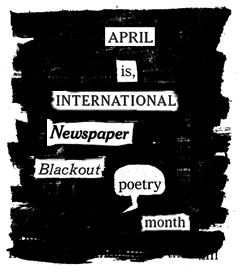
Blackout

Grab a permanent marker and newspaper or magazine from recycling. Flip to a random page, preferably with columns. First scan through the text for an image that strikes your fancy. (Your poem doesn't need to begin there. It's an idea to build on.) Next, begin blacking out the words until you hit a phrase or word or piece of word you'd like to use in your poem. Read across the columns rather than straight down to mix things up.

This is a variation on the cutups done by the Dadaists . Artists cut up pictures and poets cut up articles, then pasted them randomly together.

Austin Kleon has created many (with a book of them to be published next year) and run a few contests a couple of years ago. You can see his at his blog and more at the Flickr group of Newspaper Blackout Poems for a load of examples.

Here are Austin Kleon's TIPS:
  • Combine both columns into one poem—don’t just do each column at a time! It doesn’t make for a good read. Skip between the two…this allows for more interesting possibilities. You can see the winners here and here and here and here .
  • Remember that Westerners read left-to-right, up-to-down. Poems read best if they follow that pattern.
  • You can get around the left/right/up/down problem by connecting words with whitespace. (See an example.)
  • What you are doing when making a blackout poem, in the words of Allen Ginsberg, is “shopping for images.” Nouns and verbs make the best images.
  • Regardless of where it’s located in the text, I always start a poem by looking for a word or image that resonates with me and move from there.
  • It’s a lot like a word search.
  • You don’t have to use the whole text. What to leave in / leave out / how long is the magic.
  • Poetry doesn’t have to be serious!
  • Try not to think to hard about it and let it flow! It might take you a bunch of tries. Don’t be intimidated! Anyone can do it!
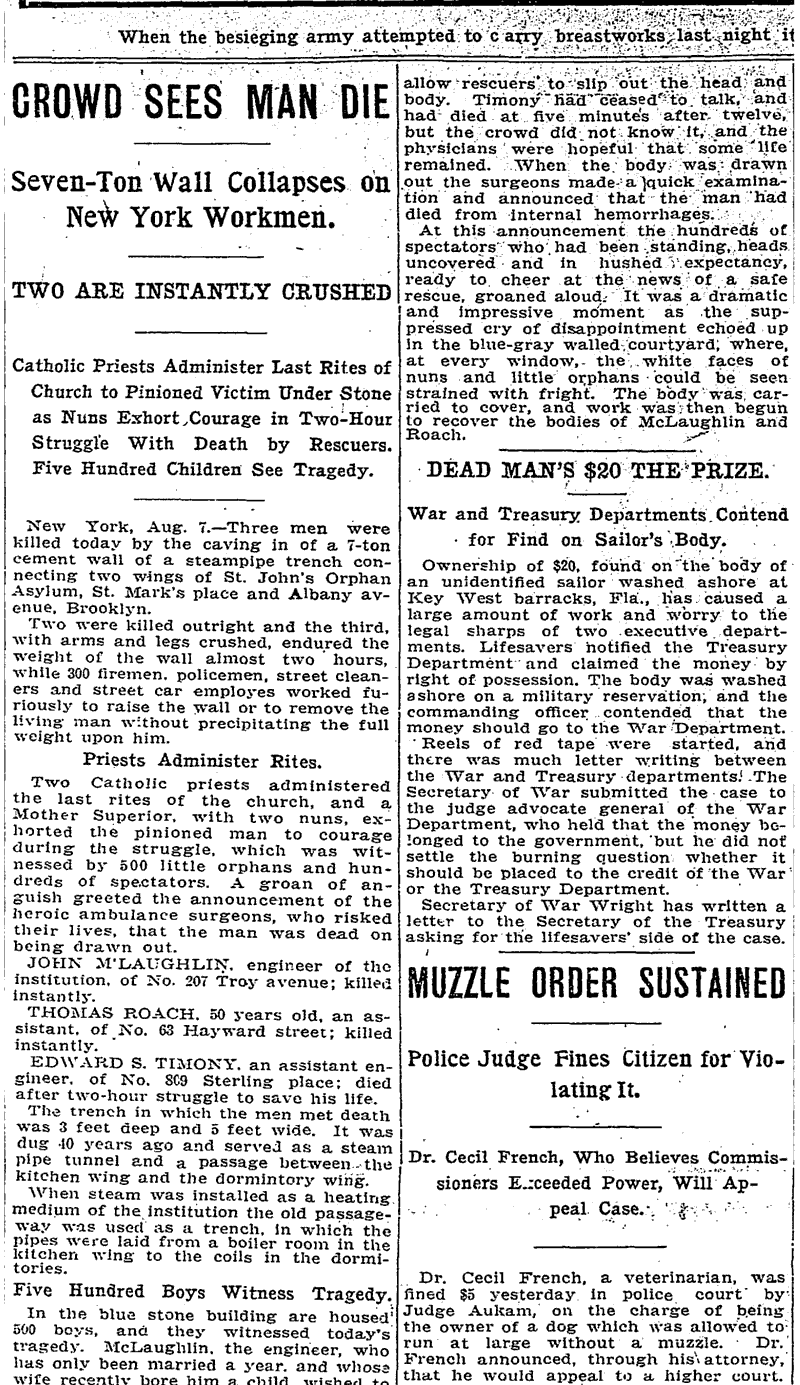
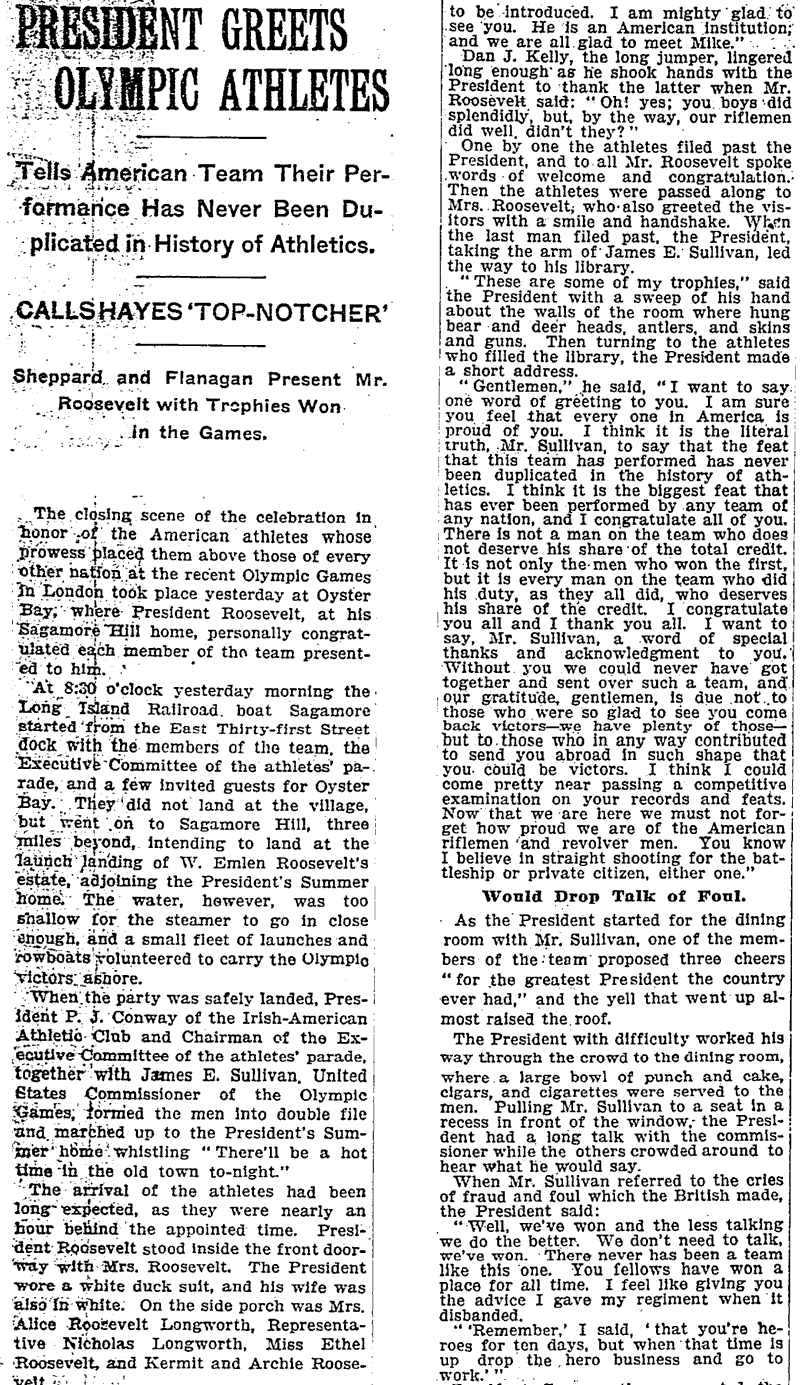
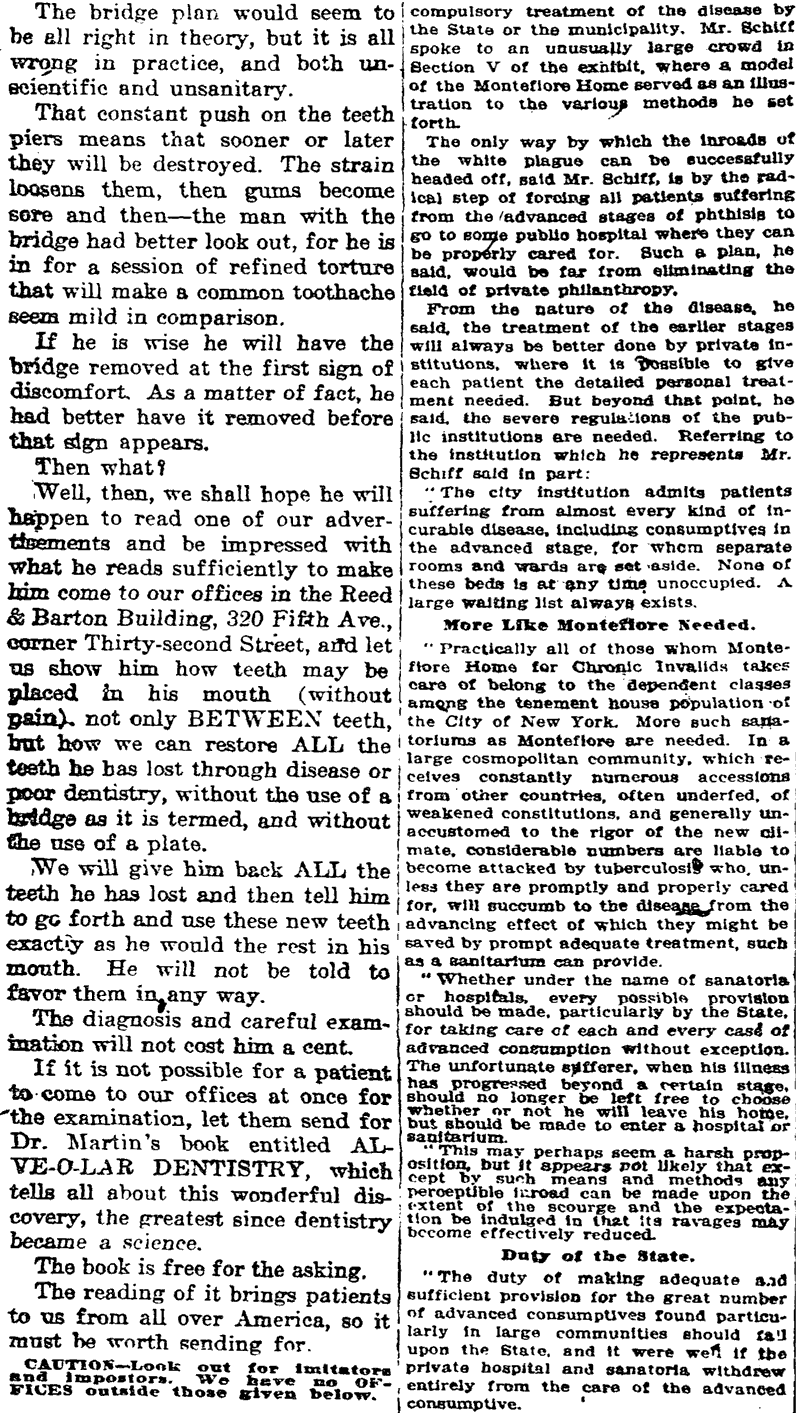
If you're lacking in newspapers or magazines, here's the text he used for the contests. If you use a paint or photo editing program, you can blackout with the paintbrush tool.

August
September
October
November

Thursday, April 09, 2009

Alphapoetically


Write a poem where each word begins with the next letter in the alphabet. (You can also write a paragraph or really long sentence if you wish.)
Andopholus Brown could devour entire fields
Grown heavy in July.
Kranky Luscious munched near open plains
Questing restlessly.
Soon Tontubulous Urvin would xray yellow zebras.
Okay, pretty awful! ;-) More prose than poetry, but the words flowed out more easily than I thought they would. (Feel free to use words beginning with "ex" for X.) It's a nice short exercise since you only need 26 words, and with some work, an actual readable poem might emerge!

Some other ideas:
  • Write from Z to A.
  • Create a 26 word poem with each letter of the alphabet but allow any order.
  • Make a list of alphabetized words or phrases about a subject (animals, your dog, restaurants, Star Trek technobabble ...). You could put 3 per line and challenge yourself to see if you can make them rhyming couplets (each pair of lines rhymes).
There are several here:

Unskilled Poet, and these at the Rock, Waves, Beach blog, all written by Kate An Alphabet Poem, Another Alphabet Poem, A December Alphabet Poem, Knitting Alphabet Poem..

Tuesday, April 07, 2009

Ritualized

A ritual is a series of actions meant to bring about or prevent an event. A ritual gives a sense of control over the unseen forces shaping our lives. In the past the actions and order were created by shamans. Today, anyone can devise a ritual. (As many sports players and teams do! Like Top 10 Sports Traditions  ;-)

Come up with a ritual for some event you (or your characters) would like control over. (It can be a simple prose list or a poetic list.)

Ron Padgett in Handbook of Poetic Forms (where this idea comes from) suggests:
  1. Decide what you would like to have occur.
  2. Examine all aspects of the subject.
  3. Think of actions to illustrate some of these aspects.
  4. Write each action down as a command.
  5. Number the commands.
  6. Let yourself go.
Here's a Storm Ritual from Alaskan Eskimos who sought to subside a storm.
  1. Build a snowman with a big head.
  2. Give the snowman's head a large mouth.
  3. Catch salmon, skin the carcasses, freeze them.
  4. Hack away at the frozen fish and push the pieces into the snowman's mouth.
  5. Afterward, have a big feast in which all the pieces of fish are eaten.


More:

This reminds me of the experiments performed by B.F. Skinner. He placed pigeons in boxes and randomly released food. The pigeons eventually began performing whatever random action they had been performing before the food was released, suggesting a type or ritual or superstition.

"One bird was conditioned to turn counter-clockwise about the cage, making two or three turns between reinforcements. Another repeatedly thrust its head into one of the upper corners of the cage. A third developed a 'tossing' response, as if placing its head beneath an invisible bar and lifting it repeatedly. Two birds developed a pendulum motion of the head and body, in which the head was extended forward and swung from right to left with a sharp movement followed by a somewhat slower return."

Coloring all over the lines

For this poetry warm up, put a color in each line. Try starting with just one color.

This will free you to see the color in not only objects but sounds and smells and numbers and feelings.

As the warm up to the warm up, Koch dropped some keys on the desk and slapped the desk with a ruler and asked the kids what color those were. He asked them what was the color of France, England and Spain; of Monday and Wednesday and the number fourteen hundred.

From Wishes, Lies, and Dreams: Teaching children to write poetry by Kenneth Koch.

Thursday, April 02, 2009

Like a window


Similes compare two unlike things to call your attention to similar aspects you wouldn't have seen. They help you see things in new ways.

Though both similes and metaphors are figures of speech, difference is similes keep the two ideas separate: The thief escaped as fast as a cheetah, and metaphors turn one thing into another: When the starter's pistol cracked, she was a cheetah freed from its cage.

Similes in Poems at Writing Fix generated the following. In either poetry or prose, expand on one of the ideas. Explore the similarities between the trait and the noun. Don't worry about whether your comparisons are working! Just get them out and down. Let them flow. Make multiple comparisons for the same aspect so you have more to work with in the edit.

Alternatively, make them all about one person and expand each a little. Explore how they all work together.

And, as always, don't feel tied to contemporary times or human characters.
  • His obedience was like a window.
  • Her need for revenge was like the desert.
  • His loyalty was like a tavern.
  • Her face was like a train.
  • His sadness was like a lighthouse.
  • Her scream was like a song.
  • His anger was like a card game.
  • Her fear was like a museum.

Egg moon

This is an idea from Wishes, Lies, and Dreams: Teaching children to write poetry by Kenneth Koch.

A bit pressed for time, here's my explanation from 2007 when I introduced them:

"In his book he has a whole series of what he calls poetry warm ups. It's a way of getting some thoughts down on paper that might with some rearranging, cutting and editing, become a poem or the seed of a poem.

Some are templates, so each line begins the same. Some are the seed to write a series of related ideas. Most have some repetition in them to help get things flowing. Don't be discouraged if your first dozen lines or more are trite. That's just the clogs coming out of your creative pathways :-) But that stuff needs to get out onto paper so the path can be freed for better ideas to flow more freely."

In addition to the regular writing prompts, I'll post one of these warm ups too.

Today's warm up is comparisons.

Include "like" or "as" in each line. The lines can be all about the same thing, or about one subject, or all different.

Some examples of templates:

______ is like ______.

______ is as ______ as ______.

Here are some examples from kids in Kenneth Koch's class:

A butterfly is like a flying rainbow.
Clouds are like flying ice cream.
Hair is like spaghetti.
The sun is as red as a fire.
The moon is like an egg.
Slow is like vanilla ice cream.
A moon is like a banana.
Thunder is like bowling.
Black ink is dark as m idnight.
Snow is as white as the sun shines.
A rose is as red as a beating of drums.